Why GVP-Compliant SOPs Fail Pharmacovigilance Inspections
GVP-compliant SOPs still fail PV inspections. Understand the gap between documentation and execution, QPPV oversight, and CAPA effectiveness.
The gap between PV documentation and system execution
Your SOPs can be compliant and still fail an inspection.
-
Your SOPs can follow GVP perfectly and still fail an inspection.
-
This is not a documentation problem. It is a system problem.
Many pharmacovigilance teams believe they are inspection-ready once SOPs are aligned, training is completed, and the PSMF is in place. On paper, everything looks correct.
But inspections often show a different reality.
The issue is simple. What is written does not always match what actually happens. That gap is where most findings come from.
What GVP compliance really requires
GVP is not just about writing SOPs. It is about how your system performs.
A compliant pharmacovigilance system must show consistent handling of safety data, timely reporting, clear ownership, and ongoing monitoring.
This is where structured system reviews like GxP audit services become important. They help identify whether the system actually aligns with documented procedures.
SOPs describe how things should work. Inspections check how things actually work. That difference matters.
What inspectors actually check
Inspectors focus on execution.
They do not rely only on documents. They review outputs, timelines, and audit trails. They also speak with the people doing the work.
They compare what SOPs say, what teams explain, and what the system shows.
If these do not match, it becomes a finding.
In many cases, organisations rely on external support like pharmacovigilance consulting to bridge this gap between documentation and execution.
Where GVP-compliant SOPs fail
The main issue is not missing SOPs. It is the gap between documentation and real work.
This gap is often described as:
- Work-as-Imagined — what SOPs describe
- Work-as-Done — how work actually happens
In theory, processes look structured and predictable. In reality, pharmacovigilance systems involve:
- Multiple teams and stakeholders
- Handoffs across functions and vendors
- Delays, dependencies, and exceptions
SOPs rarely capture this full complexity.
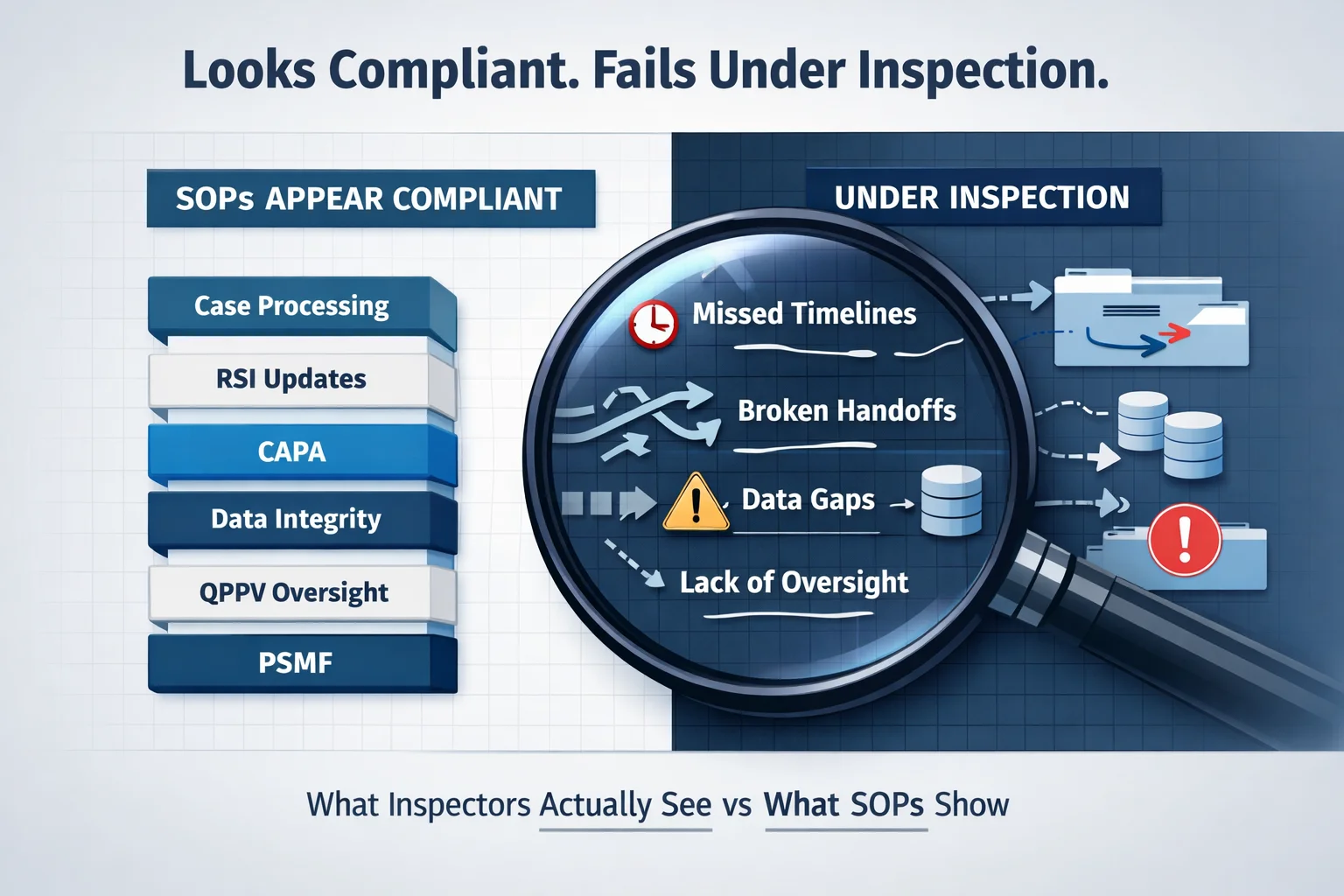
When Work-as-Done does not match Work-as-Imagined, inspections highlight the gap — and that is where findings begin.
System vs Documentation Gap in Pharmacovigilance
| Area | Documentation View (Imagined) | System Reality (Done) | Inspection Risk |
|---|---|---|---|
| Case Processing | 15/90 day timelines | Delays across teams and vendors | Late reporting findings |
| RSI Updates | Planned updates on time | Delayed or inconsistent updates | Major findings |
| CAPA | Deviations closed | Issues repeat | QMS failures |
| Data Integrity | Systems validated | Weak audit trails | Critical findings |
| QPPV Oversight | Oversight documented | Limited real involvement | Governance risk |
| PSMF | Structured document | Not fully updated | Inspection observations |
Why compliant SOPs still fail
Many SOPs are written for ideal conditions. Real systems are more complex.
Different teams, tools, and vendors are involved. If SOPs do not reflect this, they quickly become disconnected from reality.
Training is another gap. Teams may complete training but still interpret processes differently. This creates inconsistency in execution.
This is where focused programs like training and upskilling help teams move from theoretical understanding to practical execution.
CAPA is also a common weak point. Deviations may be closed, but the same issues return. This shows that root causes were not properly addressed.
Data integrity plays a critical role. Even with correct SOPs, weak audit trails or unclear records can lead to serious findings.
Automation adds another layer. It improves efficiency but introduces risks if ownership and traceability are not clearly defined.
The role of QPPV oversight
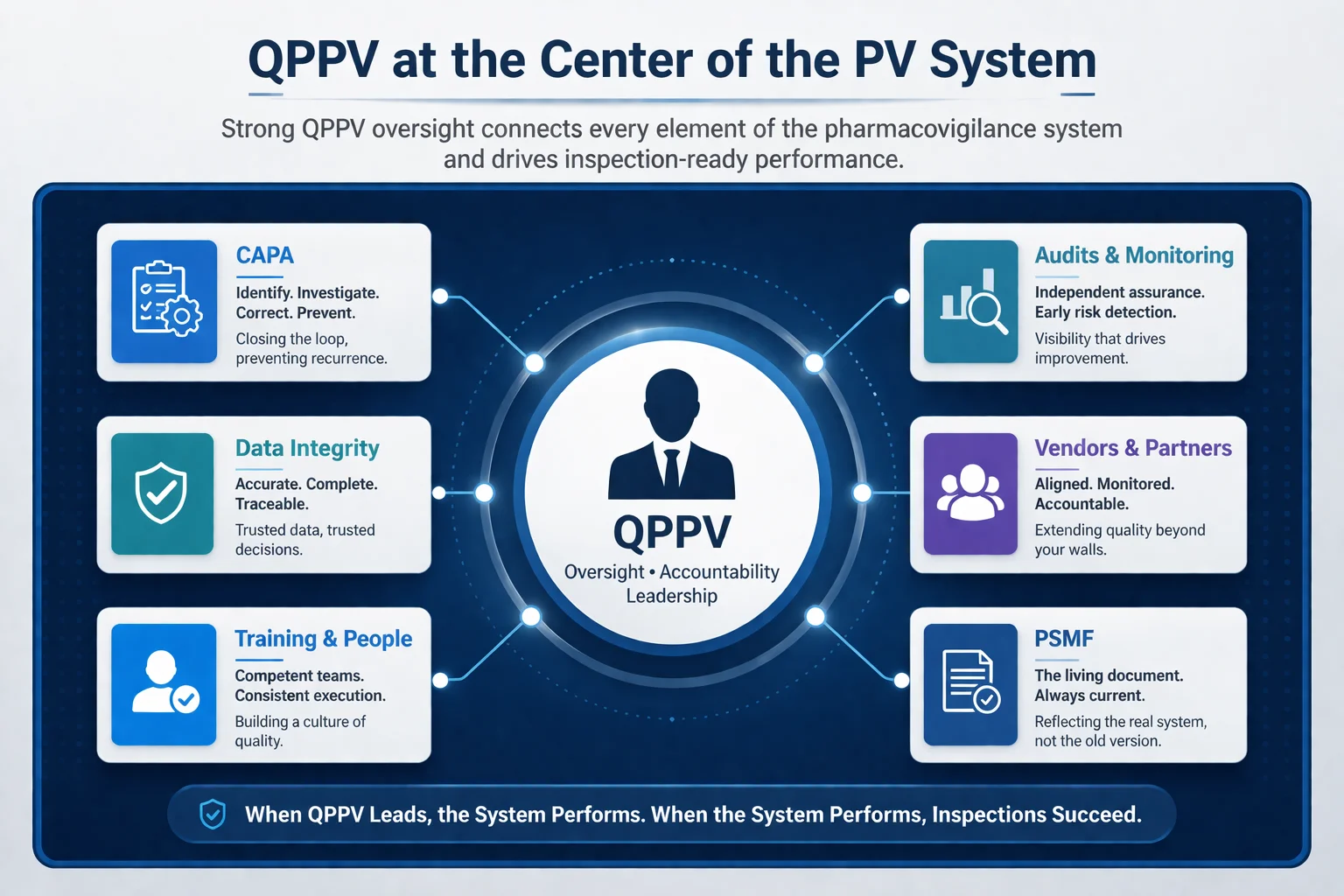
QPPV oversight is central to pharmacovigilance compliance.
Inspectors expect active involvement in system monitoring, decision-making, and vendor oversight.
If the QPPV role exists only on paper, it signals weak governance.
To understand how governance frameworks are structured, you can explore more on the About Us page, which outlines the approach to pharmacovigilance system design and oversight.
A practical way to improve your system
One of the biggest challenges in pharmacovigilance systems is complexity. Over time, SOPs tend to expand, making them difficult to follow in real-world conditions.
A more effective approach is to simplify processes and align them with how work actually happens. This means bringing clarity to responsibilities, defining clear ownership, and ensuring that each step is practical and executable.
When systems reflect real workflows instead of ideal scenarios, compliance becomes easier to maintain.
Building systems that pass inspections
Inspection readiness is not achieved by improving documents alone. It comes from building systems that function consistently under real conditions.
The first step is to understand how your system actually operates, including how data flows and how decisions are made. SOPs should then be aligned with this reality.
At the same time, all elements of the system must work together, including training, CAPA, audits, and supporting systems. The PSMF should always represent the current state of the system, not an outdated version of it.
From reactive to system-driven compliance
Many organisations still prepare for inspections at the last minute, focusing on fixing documentation just before an audit.
Stronger organisations take a different approach. They focus on system performance every day, identify gaps early, and address root causes before they escalate.
This shift from reactive preparation to system-driven compliance reduces risk and leads to more consistent inspection outcomes.
Strengthening your pharmacovigilance system before inspection
Inspection readiness is proven through system performance.
If your system cannot align documentation, execution, and oversight, findings are expected.
If you want to assess your system readiness or address gaps, you can connect directly through the Contact Us page.