How to Choose a Pharmacovigilance Consultant | MAH Guide
Learn how MAHs and biotechs can evaluate a pharmacovigilance consultant based on regulatory expertise, quality controls, geographic reach and scalability.

How to Choose a Pharmacovigilance Consultant
You do not usually discover whether you selected the right pharmacovigilance consultant on the day the contract is signed.
The answer becomes clear when an inspection notice arrives, a serious safety issue requires immediate assessment or a signal demands a documented decision. At that point, presentation decks matter far less than accessibility, regulatory judgement and operational control.
PV activities may be outsourced, but accountability for the pharmacovigilance system remains with the Marketing Authorisation Holder. Selecting a consultant therefore requires more than comparing service lists and commercial proposals.
Key Takeaway
Choose a pharmacovigilance consultant whose expertise matches your products, lifecycle stage and markets. Before comparing price, confirm who will deliver the work, how quality and data will be controlled and whether the engagement can scale.
Define the Requirement Before Comparing Proposals
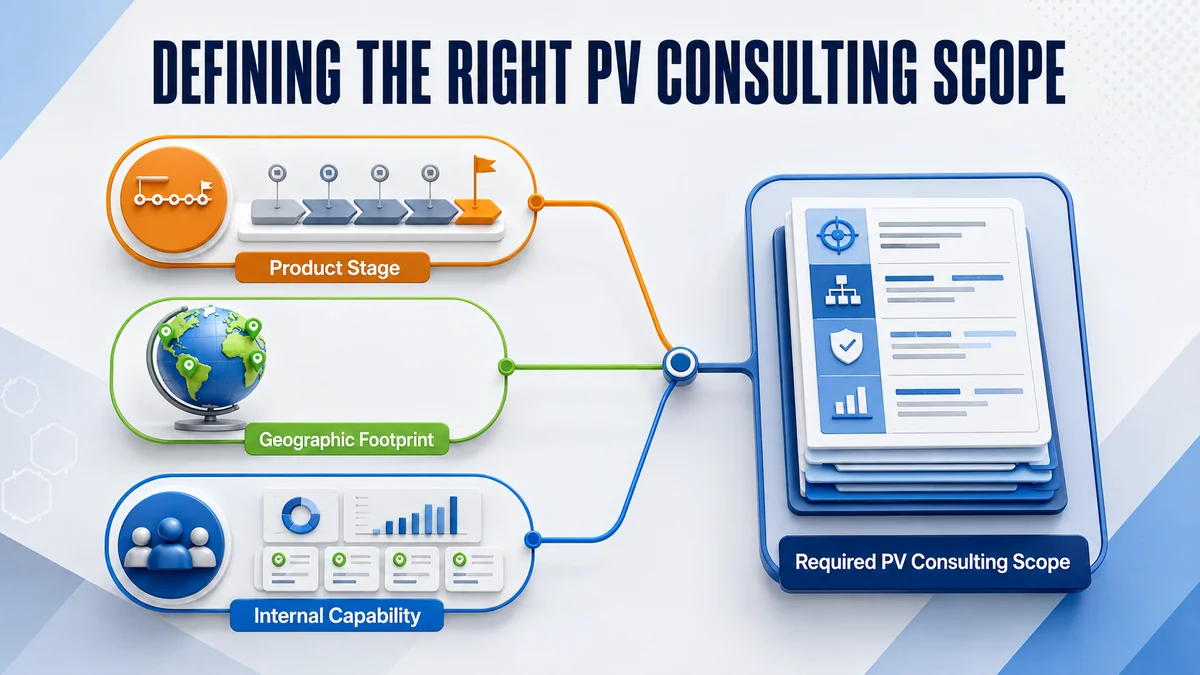
"Pharmacovigilance support" is too broad to define an effective scope. A pre-authorisation biotech and a commercial-stage MAH may have very different governance, regulatory intelligence and inspection-readiness requirements.
Define the products, jurisdictions, activities and milestones in scope. Clarify what will remain internal, what will receive external support and which decisions require MAH approval.
Does the Consultant Understand Your Markets?
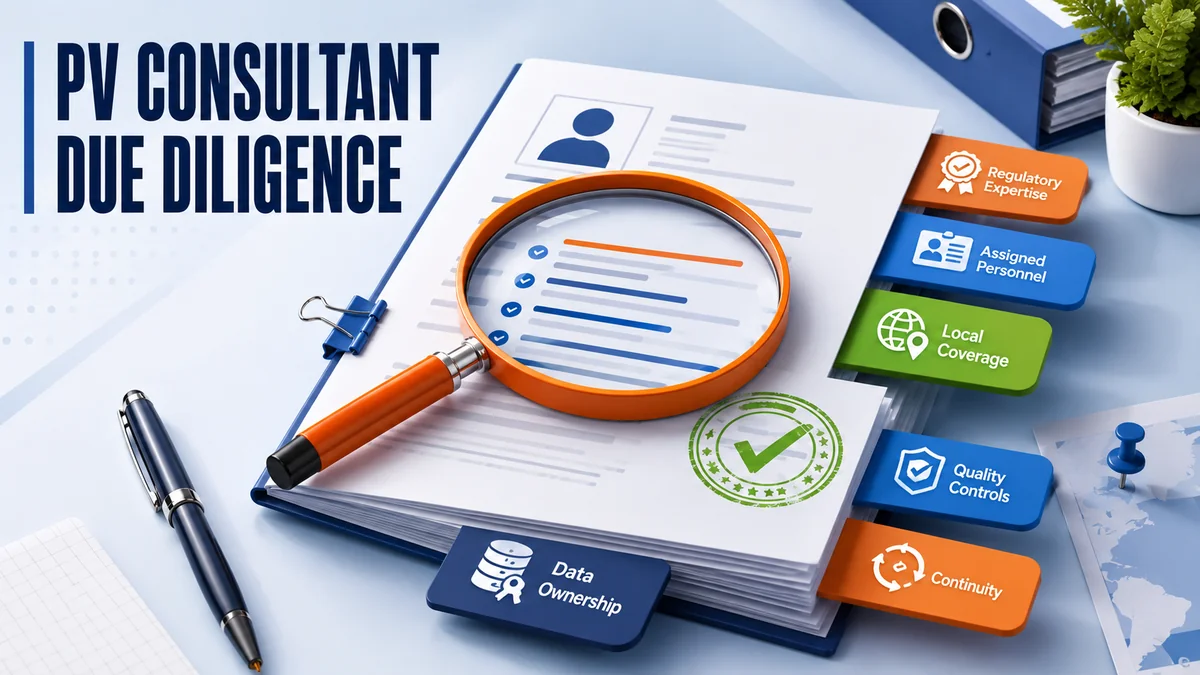
Experience in one market does not automatically demonstrate knowledge of another jurisdiction's reporting procedures, inspection practices or local PV arrangements. The EMA's Good Pharmacovigilance Practices, UK, US and Indian requirements operate through different frameworks.
Ask which markets the consultant supports directly, where local associates are used and how country-specific changes are incorporated into global processes.
Is the Experience Relevant to Your Product and Stage?
Years of experience matter, but relevance matters more. Examine whether the consultant has supported comparable products, lifecycle stages, portfolios and geographic footprints. Maintaining an established post-authorisation system may require different capabilities from building a biotech's first formal PV framework.
Ask for examples of comparable assignments and how the consultant approached them. This reveals whether the consultant applies independent regulatory judgement or simply follows instructions.
Who Will Actually Perform the Work?
The professionals presenting the proposal may not be the people assigned after appointment. Confirm who will lead the engagement, perform the work, review deliverables and respond to urgent matters. Ask about backup personnel, subcontractors and associate networks.
Evaluate the assigned team, not only the consulting brand.
Is Local PVoI Support Operationally Integrated?
For companies operating in India, Local PVoI support should not be treated as an administrative appointment. Confirm that the proposed Local PVoI has:
- Relevant qualifications and PV experience
- Access to necessary safety and system information
- Knowledge of CDSCO and PvPI expectations
- Defined oversight and escalation responsibilities
PVCON's Local PVoI services support Indian regulatory coordination and alignment between local requirements and global PV processes.
Can the Consultant Demonstrate Controlled Delivery?
Regulatory knowledge must be supported by quality controls. Ask how personnel are trained and how documents are created, reviewed, approved and retained. Examine controls for version management, CAPA, change control, data integrity and business continuity.
For operational activities, confirm who performs medical and quality review, how incomplete cases are handled and when potential signals are escalated.
Who Owns the Safety System and Data?
When a consultant provides or operates a safety database, define ownership and access before work begins. The agreement should identify who owns the data, controls permissions, manages changes and maintains backups.
It should also explain how records will be exported and transferred when the company changes providers or brings activities in-house.
Can the Consultant Grow With the Organisation?
PV requirements change as studies progress, case volumes rise and new markets are entered. Ask how the proposed model would respond to increased workloads or additional jurisdictions while maintaining senior review, controlled onboarding and decision history.
Warning Signs During Selection
Request further evidence when:
- The delivery team is not named.
- Global coverage lacks country-level detail.
- Data ownership remains unclear.
- No backup arrangement is provided.
- Subcontracting relationships are not disclosed.
- Deliverables lack acceptance criteria.
- Pricing ignores portfolio and market complexity.
- Inspection readiness is promised without assessing the PV system.
These signs indicate that further evidence is required before selection.
Choose for the Moments That Test the PV System
The difference between pharmacovigilance consultants becomes clear when the work requires judgement, documented escalation and coordinated action. Choose a consultant with relevant experience, an accessible delivery team and processes that can withstand regulatory scrutiny.
PVCON supports MAHs and biotechs through pharmacovigilance consulting, PV QMS development, regulatory intelligence and Local PVoI support.
PVCON Consulting supports pharmaceutical, biotechnology, CRO, and medical device organizations through specialized services including GxP Audits, PV Audits, GCP Audits, Other GxP Audits, Pharmacovigilance Consulting, PV Quality Management System support, PvOIC services, Regulatory Intelligence, Medical Writing, Aggregate Report Writing, Clinical Safety Documents, RMP and REMS Writing, PSMF Management, and Training & Upskilling initiatives such as Training Matrix, Regulatory Compliance Training, PV Boot Camp, and Customized Learnings.
Our expertise helps organizations strengthen drug safety operations, improve inspection and audit readiness, and keep PSMF documentation compliant, accurate, and aligned with real-world PV system practices and regulatory expectations.
To discuss your requirements, you can contact our team or learn more about us.