PV Audit Outsourcing: When Should You Outsource?
Learn when PV audit outsourcing can help MAHs address auditor capacity, global coverage, programme consistency and continuous audit readiness.

PV Audit Outsourcing: When Should You Outsource Your Audit Programme?
An audit programme rarely falls behind all at once.
One vendor audit moves to the next quarter because the only available auditor is supporting another priority. An affiliate assessment is delayed while regional expertise is sourced. A follow-up audit remains unplanned because the annual programme is already full.
Each decision appears manageable in isolation. Together, they can leave critical areas without timely, risk-based coverage. The problem becomes visible when an inspection is announced and the organisation must explain why a critical vendor has not been audited or why CAPA effectiveness remains unverified.
The underlying issue is often not intent. It is capacity. PV audit outsourcing provides access to independent auditors, specialist expertise and coordinated programme delivery while the organisation retains responsibility for audit governance.
Key Takeaway
Consider PV audit outsourcing when the scale, geographic reach or specialist requirements of the programme exceed internal capacity. Audit-as-a-Service provides planned auditor access and consistent delivery, while programme approval and oversight remain with the organisation.
What Is PV Audit-as-a-Service?
PV Audit-as-a-Service is a managed model covering part or all of a pharmacovigilance audit programme: risk assessment, planning, auditor allocation, execution, reporting, CAPA and follow-up. It is a commercial delivery model, not a separate regulatory category.
Commission Implementing Regulation (EU) No 520/2012 requires risk-based audits at regular intervals, run independently of the processes assessed. EMA GVP Module IV sets out three connected levels: audit strategy, audit programme and individual audit plans. A managed service keeps all three running continuously, not as one-off reactive checks.
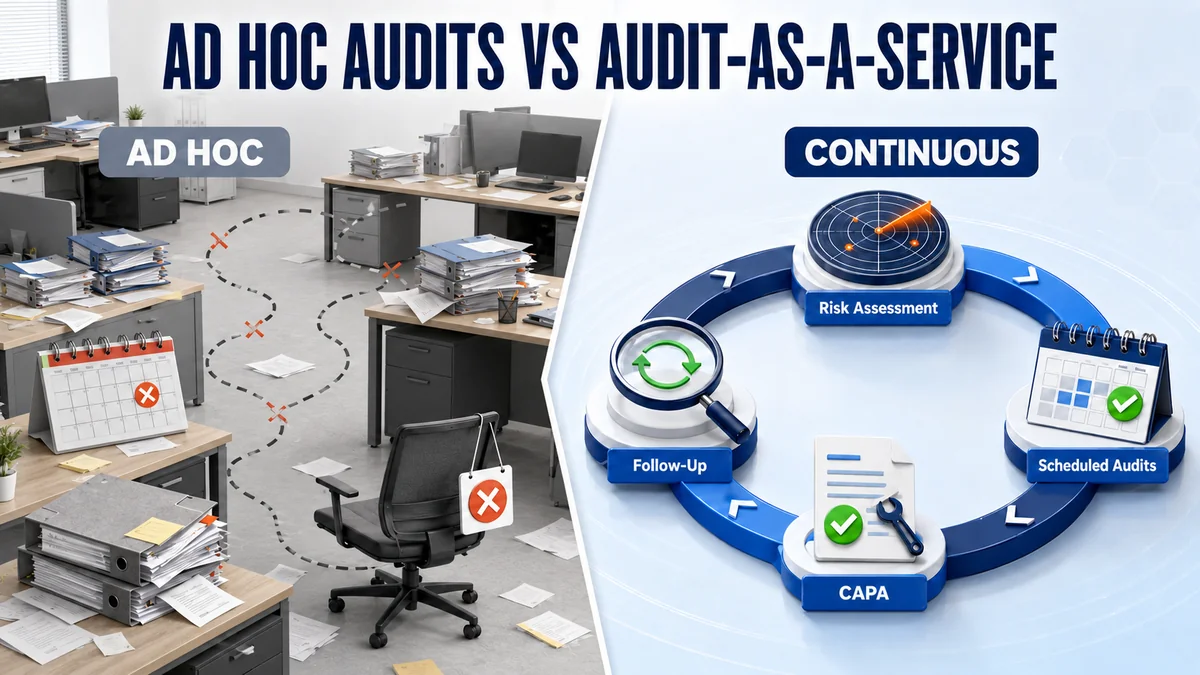
That is the shift shown below: from ad hoc audits to a continuous cycle of Risk Assessment, Scheduled Audits, CAPA and Follow-Up.
Why Ad Hoc Audit Outsourcing Becomes Difficult
Ad hoc outsourcing can work for a single specialist audit. When it becomes the default model, each assignment may require a new auditor search, separate contracting, repeated onboarding and agreement on methodology. Reports and finding classifications may also vary.
The result can be several completed audits without a consistently managed programme. Audit-as-a-Service shifts the focus from filling the next assignment to maintaining risk-based audit capacity.
When Does PV Audit Outsourcing Make Sense?
Internal capacity cannot deliver the programme
Outsourcing becomes relevant when audits are repeatedly postponed, specialist assignments compete for limited resources or the audit universe has expanded beyond internal capacity.
Independence is difficult to maintain
Smaller organisations may have experienced PV professionals but no one sufficiently independent from the processes under review. External auditors provide that separation, although the organisation must still document their competence, independence and objectivity.
The vendor network is expanding
Case-processing partners, literature-screening providers, safety database vendors and local operations can all form part of the audit universe. The MHRA confirms that MAHs retain responsibility for compliant PV activity when work is contracted to service providers. As outsourcing increases, so does the need for structured audit coverage.
Regional or specialist expertise is required
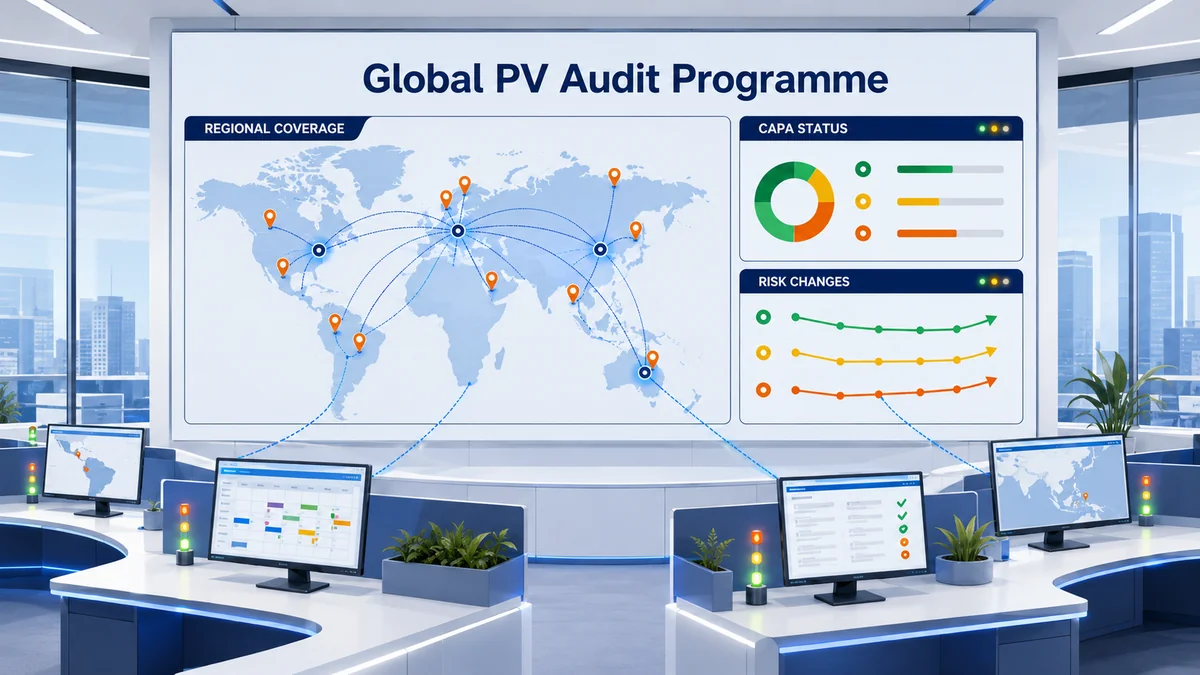
A global audit programme may involve different languages, requirements and safety systems. A managed provider can allocate auditors by geography, language and technical experience without requiring a large internal auditor bench.
Demand changes during the year
Database migrations, new products, regulatory changes and inspection outcomes can alter audit priorities. Outsourcing provides additional capacity when the internal team cannot absorb unplanned, risk-driven work.
What Does Continuous Audit Readiness Mean?
Continuous readiness does not mean auditing continuously. It means keeping the programme aligned with the current PV system and being able to explain why an area was selected, deferred or reprioritised.
Plans, auditor qualification records, reports, CAPA status and follow-up evidence remain accessible. Audit results also inform future risk assessments, creating a programme that learns from its own evidence.
Should You Outsource, Co-Source or Keep Audits In-House?
Full outsourcing is not always necessary.
| Model | Most appropriate when |
|---|---|
| In-house programme | The organisation has sufficient independent auditors, specialist expertise and geographic coverage |
| Specialist support | One process, system or jurisdiction requires external expertise |
| Co-sourced programme | Internal audit retains leadership while an external partner adds capacity |
| Audit-as-a-Service | Coordinated delivery is required across a wider audit programme |
Co-sourcing is often the practical middle path. The internal function retains strategy and governance while external auditors provide regional reach, specialist knowledge or additional capacity.
What Should You Evaluate in a Provider?
Confirm that the provider offers programme capability rather than simply access to individual auditors. Evaluate PV-specific competence, independence, geographic coverage, methodology, report quality, follow-up capacity and business continuity.
Use a scenario test. Present a critical vendor that has changed its safety database while carrying overdue CAPAs. Ask how the provider would reassess risk, adjust programme priority and plan follow-up. The response will reveal whether it thinks at programme level or treats audits as isolated events.
Auditing as an Operating Control
PV audit outsourcing becomes appropriate when the organisation can no longer deliver independent, risk-based coverage consistently across its processes, vendors and markets. The objective is not to remove internal responsibility, but to ensure that audit capacity develops with the PV system.
PVCON supports MAHs and life sciences organisations through independent pharmacovigilance audits, risk-based planning and global auditor coverage.
PVCON Consulting supports pharmaceutical, biotechnology, CRO, and medical device organizations through specialized services including GxP Audits, PV Audits, GCP Audits, Other GxP Audits, Pharmacovigilance Consulting, PV Quality Management System support, PvOIC services, Regulatory Intelligence, Medical Writing, Aggregate Report Writing, Clinical Safety Documents, RMP and REMS Writing, PSMF Management, and Training & Upskilling initiatives such as Training Matrix, Regulatory Compliance Training, PV Boot Camp, and Customized Learnings.
Our expertise helps organizations strengthen drug safety operations, improve inspection and audit readiness, and keep PSMF documentation compliant, accurate, and aligned with real-world PV system practices and regulatory expectations.
To discuss whether specialist support, co-sourcing or Audit-as-a-Service fits your programme, you can contact our team or learn more about us.