Understanding PVOIC Requirements in India: What CDSCO Expects from MAHs
Understand PVOIC requirements in India and what CDSCO expects from MAHs for pharmacovigilance inspection readiness and compliance.
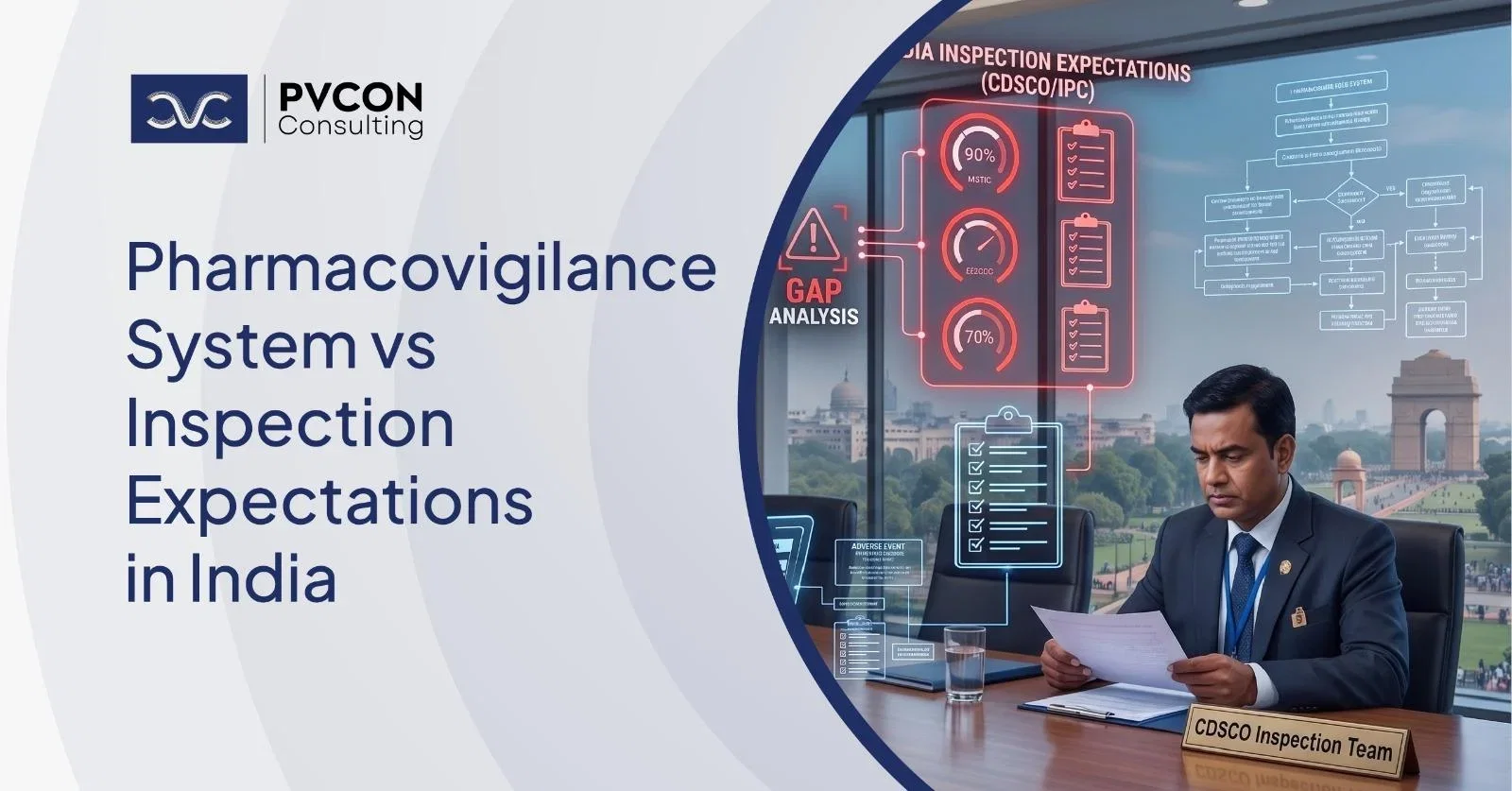
For PVOICs, PV leads, and MAH QA heads operating in India
Pharmacovigilance in India Has Moved Beyond Reporting
Pharmacovigilance in India is no longer about submitting adverse event reports on time. It is about demonstrating that a complete, functioning safety system exists within the MAH.
This shift is clearly reflected in the Pharmacovigilance Guidance Document for MAHs, Version 2.0, published by the Indian Pharmacopoeia Commission in collaboration with Central Drugs Standard Control Organization.
What started as periodic reporting obligations has now evolved into a system-level expectation reinforced by updated guidance and Revised Schedule M.
Today, regulators are not asking whether reports were submitted. They are asking whether the system behind those reports is reliable, traceable, and controlled.
What CDSCO Pharmacovigilance Requirements Mean for MAHs
CDSCO pharmacovigilance requirements for MAHs in India now go beyond reporting obligations. They require the MAH to operate a structured pharmacovigilance system that can withstand inspection.
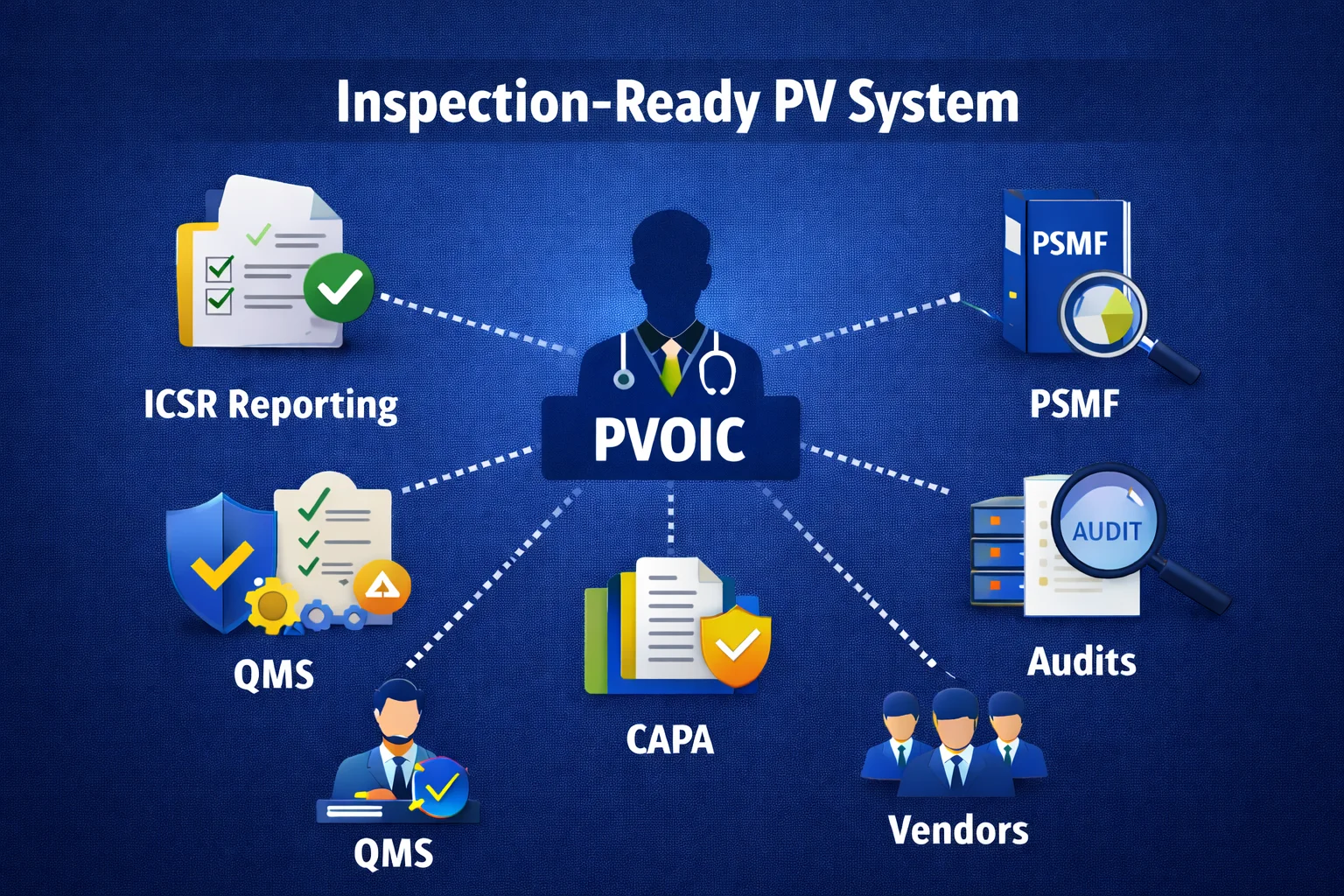
This system includes a designated PVOIC, a maintained PSMF, a functioning Quality Management System, and clearly defined processes for safety reporting, audits, and oversight.
In practice, this means the MAH must be able to show how safety data flows across the organization, how decisions are made, and how compliance is continuously monitored.
Organizations that struggle here often benefit from structured support such as pharmacovigilance consulting services or independent system reviews.
CDSCO does not inspect reports. It inspects systems.
PVOIC Roles and Responsibilities Under CDSCO Pharmacovigilance Guidance
The Pharmacovigilance Officer-in-Charge (PVOIC) is not just a regulatory requirement. It is the central accountability point for the MAH's pharmacovigilance system.
The PVOIC is expected to be a medically or pharmacy-qualified professional based in India, capable of responding to regulatory queries and overseeing all pharmacovigilance activities, including those handled by third parties.
More importantly, the PVOIC must understand how the system works in practice. This includes being able to explain how cases are identified, processed, evaluated, and reported, and how risks are monitored across the product lifecycle.
In many organizations, the PVOIC exists on paper but has limited visibility into operations. This is one of the most common inspection risks, especially in companies relying heavily on outsourced models without strong GxP audit and oversight frameworks.
If the system fails, the PVOIC cannot step away from it. The expectation is clear. The PVOIC owns the system.
What Happens During a Pharmacovigilance Inspection in India
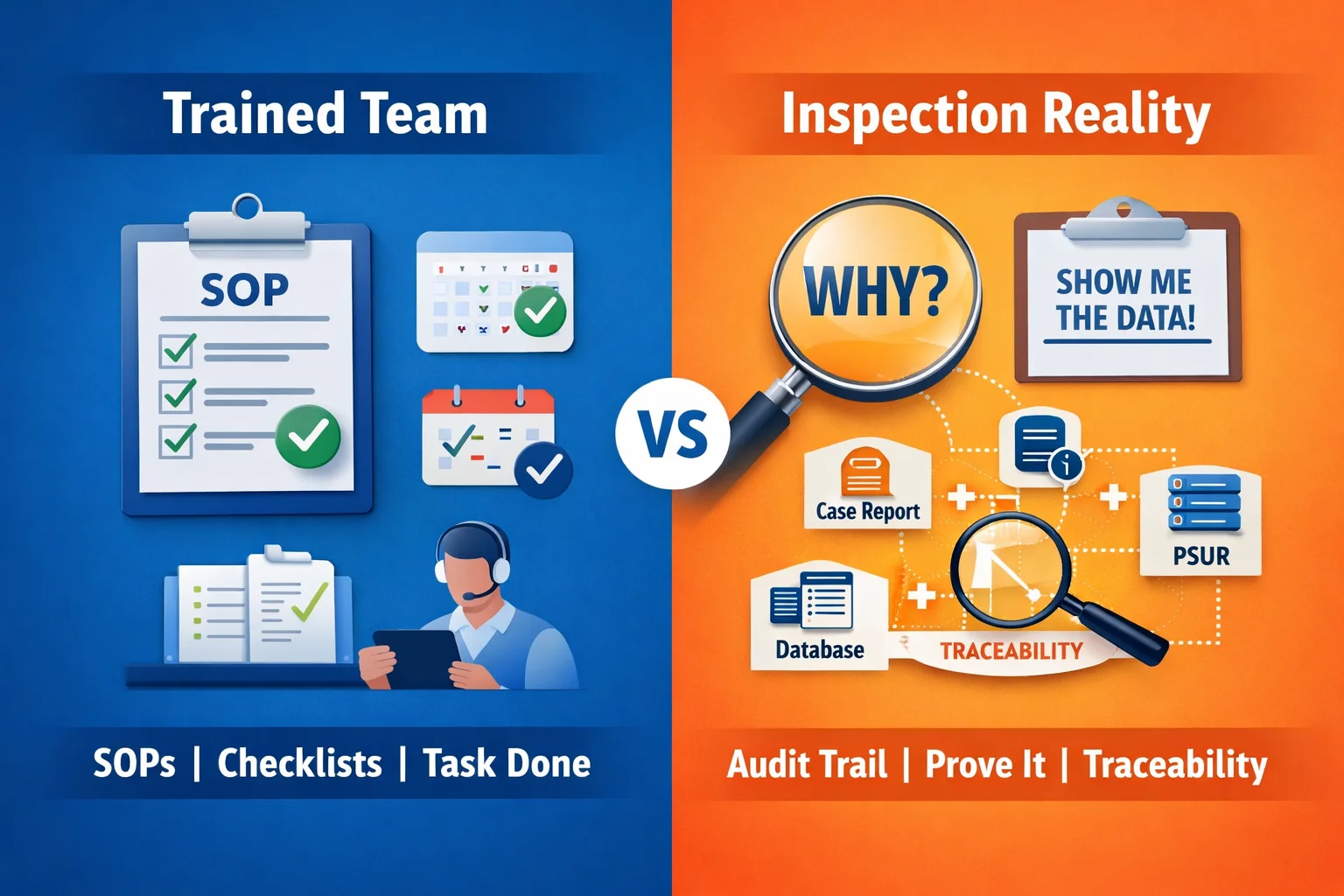
Pharmacovigilance inspection in India is designed to evaluate system behavior, not documentation alone.
Inspectors assess whether processes described in SOPs are actually followed, whether CAPAs are effective, and whether oversight is real.
This is where even well-trained teams begin to break.
For example, a team may demonstrate correct case processing steps, but fail to trace a case from initial receipt through database entry to PSUR inclusion within minutes. That gap alone can trigger a finding.
Similarly, CAPAs may be formally closed, but recurring deviations indicate that the system has not actually improved.
Where MAH Systems Usually Fail
Most inspection findings are not due to missing documents. They arise from weak system control.
Common gaps include:
- Documentation traceability — Teams struggle to connect source data, safety databases, and reporting outputs during inspection.
- QMS gaps in execution — SOPs define processes such as follow-ups, but real-world execution does not consistently match what is documented.
- Limited PVOIC visibility — The role is defined, but not actively involved in audits, signal reviews, or key decision-making.
- Weak vendor oversight — Outsourced partners handle PV activities, but governance, monitoring, and accountability are not clearly demonstrated.
- CAPA effectiveness issues — Issues are formally closed, but root causes are not addressed, leading to repeated deviations.
Pharmacovigilance Inspection Readiness vs Training
| Area | Trained Team | Inspection-Ready System |
|---|---|---|
| Focus | Task execution | System understanding |
| Documentation | Exists | Traceable and explainable |
| QMS | Defined | Actively monitored |
| QPPV | Assigned | Demonstrates oversight |
| CAPA | Closed | Proven effective |
How PSMF Supports PV Inspection Readiness in India
The Pharmacovigilance System Master File is not just a regulatory document. It is the primary evidence of how the pharmacovigilance system functions.
For MAHs in India, the PSMF must clearly describe system structure, roles, processes, performance metrics, audit history, and oversight of outsourced activities.
The latest guidance aligns closely with global expectations while requiring localization for Indian regulatory requirements.
Strong documentation alone is not enough. It must reflect how the system actually operates, which is why many MAHs integrate structured medical writing support for regulatory documentation into their PV workflows.
Regulatory Timelines Under CDSCO Pharmacovigilance Requirements
Timelines remain a critical part of compliance.
Key expectations include:
- Serious adverse event reporting — Must be completed within 15 calendar days from first awareness by the MAH.
- Non-serious adverse event timelines — Updated guidance allows extended reporting timelines, reflecting recent regulatory changes.
- PSUR submission requirements — Must follow defined regulatory cycles based on product approval timelines.
- Literature monitoring — Regular review of scientific literature is expected as part of ongoing safety evaluation.
These are baseline expectations. Failure here is a compliance issue, not a system maturity issue.
What Pharmacovigilance Inspection Readiness Really Means in India
Inspection readiness is not about preparing for audits. It is about building a system that can demonstrate control in real time.
This includes being able to trace cases end-to-end, explain decision-making, and show that corrective actions are effective.
It also requires that roles like the PVOIC are actively engaged in system governance, supported by trained teams and continuous upskilling through structured programs like pharmacovigilance training and upskilling.
Inspection Readiness Is a System, Not a Training Outcome
Training enables execution. It does not guarantee inspection readiness.
Inspection readiness depends on how well the system is designed, monitored, and controlled over time.
If you are a PVOIC or PV lead, the real question is not whether your team is trained. It is whether your system can defend itself under inspection.
For a focused pharmacovigilance system review covering PSMF, QMS, and vendor oversight, you can connect with the PVCON team.