Aggregate Reporting Case Study: PSUR PBRER PADER Support
See how PVCON helped a pharmaceutical company clear an aggregate reporting backlog by completing 8 safety reports, improving review cycles and supporting on-time submissions.
- Client
- Pharmaceutical company
- Focus
- Aggregate report planning, medical writing, scientific review and quality control
- Duration
- 10 weeks
Results
- aggregate reports completed
- 8aggregate reports completed
- review rounds
- 3 → 2review rounds
- less finalisation time
- 30%less finalisation time
- engagement duration
- 10 weeksengagement duration
Clearing the Aggregate Reporting Backlog
How PVCON helped a pharmaceutical company manage a growing aggregate reporting workload, complete safety reports on schedule and improve review efficiency.
Growing Reporting Requirements Created Operational Pressure
A pharmaceutical company managing a growing product portfolio faced increasing pressure around its aggregate reporting commitments.
Multiple safety reports, including Periodic Safety Update Reports (PSURs), Periodic Benefit-Risk Evaluation Reports (PBRERs) and Periodic Adverse Drug Experience Reports (PADERs), were approaching due dates while internal teams were managing competing pharmacovigilance activities.
The challenge was not only report writing.
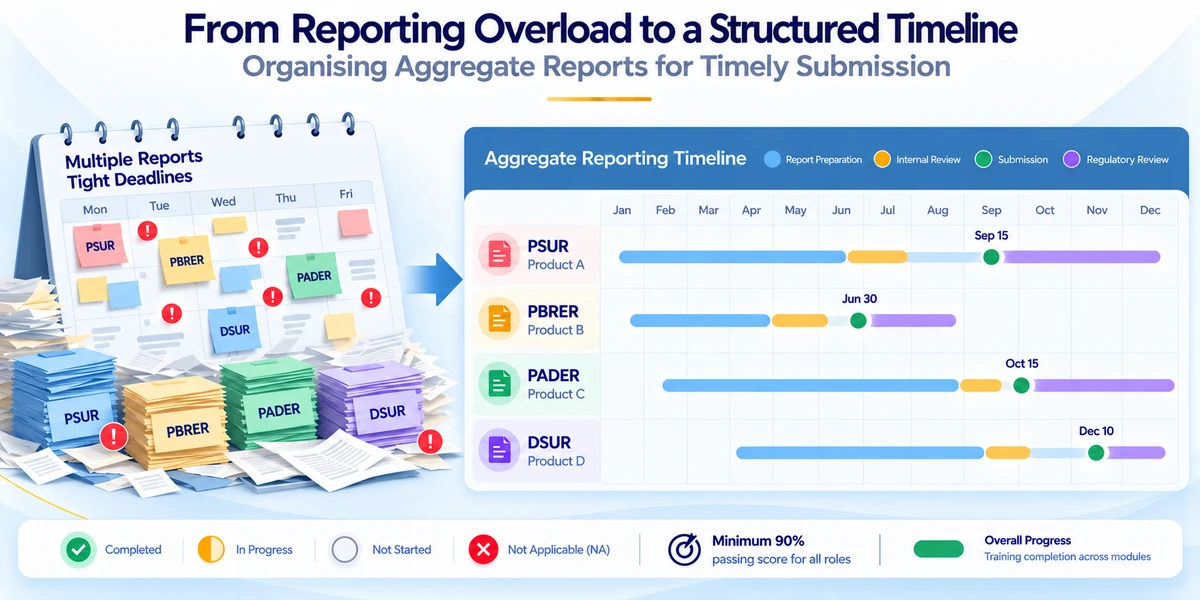
Each report required coordination across safety data review, signal evaluation, benefit-risk assessment, medical writing, quality checks and final approval workflows.
As the reporting volume increased, review cycles became longer and finalisation timelines became difficult to maintain.
The company required additional pharmacovigilance medical writing support to establish a structured reporting approach and clear the pending workload without compromising quality.
Creating a Structured Approach to Aggregate Report Completion
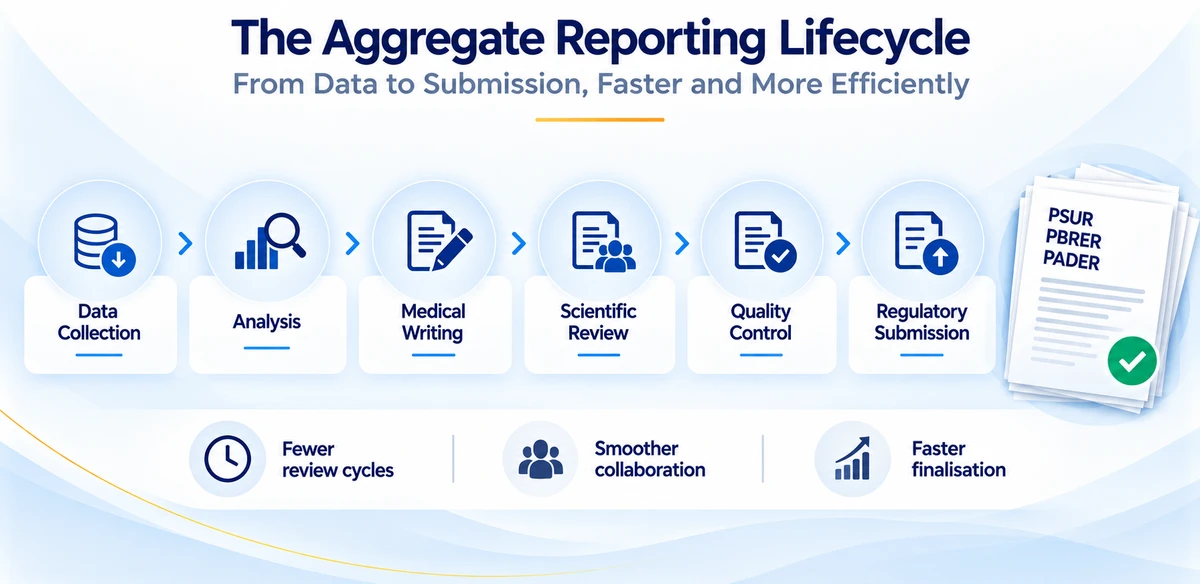
PVCON supported the organisation with end-to-end aggregate report management, from planning through finalisation.
The engagement began with a review of pending reports, timelines, available safety data and required review workflows.
PVCON supported:
- Aggregate report planning and scheduling
- Safety data review coordination
- Medical writing and report development
- Scientific review support
- Quality control checks
- Finalisation readiness
The approach created a more controlled reporting process by defining responsibilities, improving review coordination and reducing delays between drafting, review comments and final approval.
The support aligned with the principles of a robust pharmacovigilance quality system, where reporting activities require documented processes, quality oversight and traceable decisions.
What Needed to Be Improved
| Reporting Area | Challenge Identified | PVCON Support | Outcome |
|---|---|---|---|
| Report Planning | Multiple reports approaching deadlines simultaneously | Developed structured reporting plan and timelines | Clearer visibility of reporting commitments |
| Medical Writing | Limited internal capacity for report preparation | Provided aggregate report writing support | 8 reports completed |
| Scientific Review | Multiple review rounds delayed finalisation | Coordinated review and quality checks | Review cycles reduced from 3 to 2 |
| Quality Control | Need for consistent report quality before submission | Performed QC and finalisation checks | Improved submission readiness |
| Submission Timelines | Risk of delayed regulatory submissions | Managed completion workflow | All reports submitted on time |
Delivering Reports on Time With Greater Review Efficiency
Through the structured reporting approach, PVCON completed 8 aggregate reports within 10 weeks and supported submission within the required timelines.
The improved workflow reduced review cycles from 3 rounds to 2 rounds, helping decrease overall finalisation time by 30%.
The organisation gained better control over its reporting commitments through clearer planning, coordinated review processes and improved quality oversight.
The outcome was not only the completion of pending reports.
The company established a more sustainable approach for managing future aggregate reporting requirements across its product portfolio.
Turning Reporting Pressure Into a Controlled Process
Aggregate reporting requires more than meeting submission dates.
Each report needs consistent scientific evaluation, accurate safety interpretation and alignment between source data, benefit-risk conclusions and regulatory expectations.
When reporting activities become reactive, organisations may face increased review cycles, inconsistent documentation and avoidable delays.
For this pharmaceutical company, structured support helped convert a growing backlog into a more controlled reporting process.
PVCON supports organisations with aggregate report writing services, including PSUR, PBRER, PADER and DSUR preparation, quality review and submission-readiness support.
Managing increasing aggregate reporting requirements? Explore PVCON's medical writing support or contact PVCON to discuss strengthening your reporting process.