RMP Update Case Study: Pharmacovigilance Risk Management Plan Support
See how PVCON helped a pharmaceutical company update its RMP after a new safety concern emerged, resolving regulatory comments and protecting submission timelines.
- Client
- Pharmaceutical company
- Focus
- RMP update, safety assessment, pharmacovigilance plan and risk minimisation strategy
- Duration
- 5 weeks
Results
- to complete the updated RMP
- 5 weeksto complete the updated RMP
- regulatory comments resolved
- 11regulatory comments resolved
- review cycle to resolve them
- 1review cycle to resolve them
- major restructuring requests
- 0major restructuring requests
Updating the RMP Before Time Ran Out
How PVCON helped a pharmaceutical company update its Risk Management Plan after a new safety concern emerged while maintaining regulatory submission timelines.
A New Safety Concern Changed the Risk Management Landscape
A pharmaceutical company preparing a regulatory submission identified new safety information that affected the assumptions within its existing Risk Management Plan (RMP).
The available safety information required reassessment of the product’s identified and potential risks, along with a review of whether existing pharmacovigilance activities and risk minimisation measures remained appropriate.
The challenge was timing.
The RMP update needed to be completed within a limited submission window while ensuring that the revised document accurately reflected the updated safety profile and regulatory expectations.
The company required specialised RMP writing support to reassess the risk-management strategy, update relevant sections and prepare a submission-ready document.
Reassessing the RMP Around the Updated Safety Profile
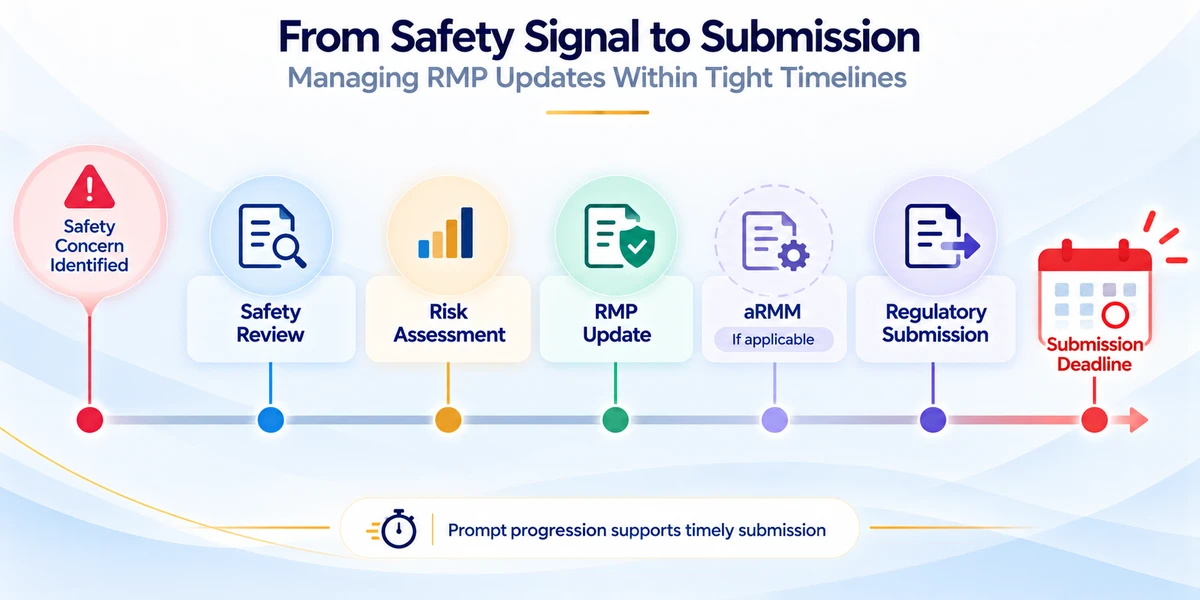
PVCON reviewed the existing RMP structure and assessed how the new safety information affected the overall risk-management approach.
The engagement focused on evaluating the impact of the safety concern, updating relevant risk-management sections and ensuring alignment between safety information, pharmacovigilance activities and risk minimisation measures.
The support included:
- Review of existing RMP sections
- Assessment of new safety information
- Update of safety concerns and risk characterisation
- Revision of pharmacovigilance activities
- Review of risk minimisation measures
- Preparation of the revised RMP for submission
The updated approach ensured that the RMP reflected the current understanding of the product’s safety profile while maintaining consistency across related pharmacovigilance documentation.
What Needed to Be Updated
| RMP Area | Challenge Identified | PVCON Support | Outcome |
|---|---|---|---|
| Safety Profile | New safety information affected existing risk assessment | Reassessed identified and potential risks | Updated safety considerations incorporated |
| Pharmacovigilance Plan | Existing activities required review | Updated monitoring activities and commitments | Revised PV strategy aligned with current risks |
| Risk Minimisation | Existing measures required reassessment | Reviewed and updated risk minimisation approach | Measures aligned with updated safety concerns |
| Regulatory Comments | Multiple points required resolution before submission | Prepared responses and revised documentation | 11 comments resolved in one review cycle |
| Submission Timeline | Limited time available for completion | Managed accelerated RMP update workflow | RMP completed within 5 weeks |
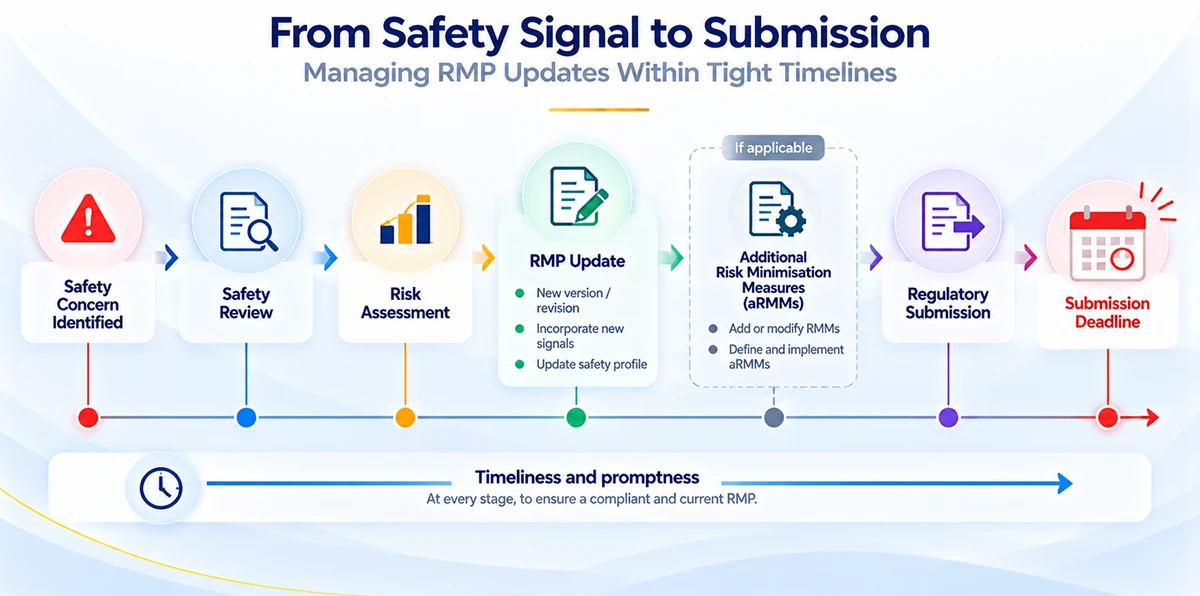
Delivering a Submission-Ready RMP Within a Critical Timeline
Through focused assessment and coordinated review, PVCON completed the updated RMP within 5 weeks.
The revised document addressed the emerging safety concern while maintaining alignment between risk characterisation, pharmacovigilance activities and risk minimisation measures.
During regulatory review, all 11 comments were resolved within one review cycle, with no major restructuring requested.
The outcome was not only a completed document.
The organisation had a more current and defensible risk-management strategy that reflected the updated safety profile and supported the next stage of regulatory engagement.
Keeping Risk Management Aligned Throughout the Product Lifecycle
An RMP is not a one-time submission document.
As new safety information emerges, organisations need to reassess whether existing risk characterisation, pharmacovigilance activities and risk minimisation measures remain appropriate.
A delayed or poorly structured update can create avoidable pressure during regulatory interactions.
For this pharmaceutical company, timely RMP revision helped maintain submission readiness while ensuring the risk-management approach remained aligned with current safety information.
PVCON supports organisations with RMP and REMS writing services, including risk assessment, risk minimisation strategy development and lifecycle updates.
Need support with an RMP update? Explore PVCON's pharmacovigilance medical writing support or contact PVCON to discuss your risk-management requirements.