12 Questions to Ask Before Hiring a GxP Audit Firm
Hiring a GxP audit firm? Use these 12 questions to evaluate auditor competence, methodology, independence, reporting, and scope.

12 Questions to Ask Before Hiring a GxP Audit Firm
A GxP audit firm may present a strong proposal, experienced leadership, and a detailed methodology. However, the actual engagement can still fall short if inexperienced auditors are assigned or the approach relies on a generic checklist.
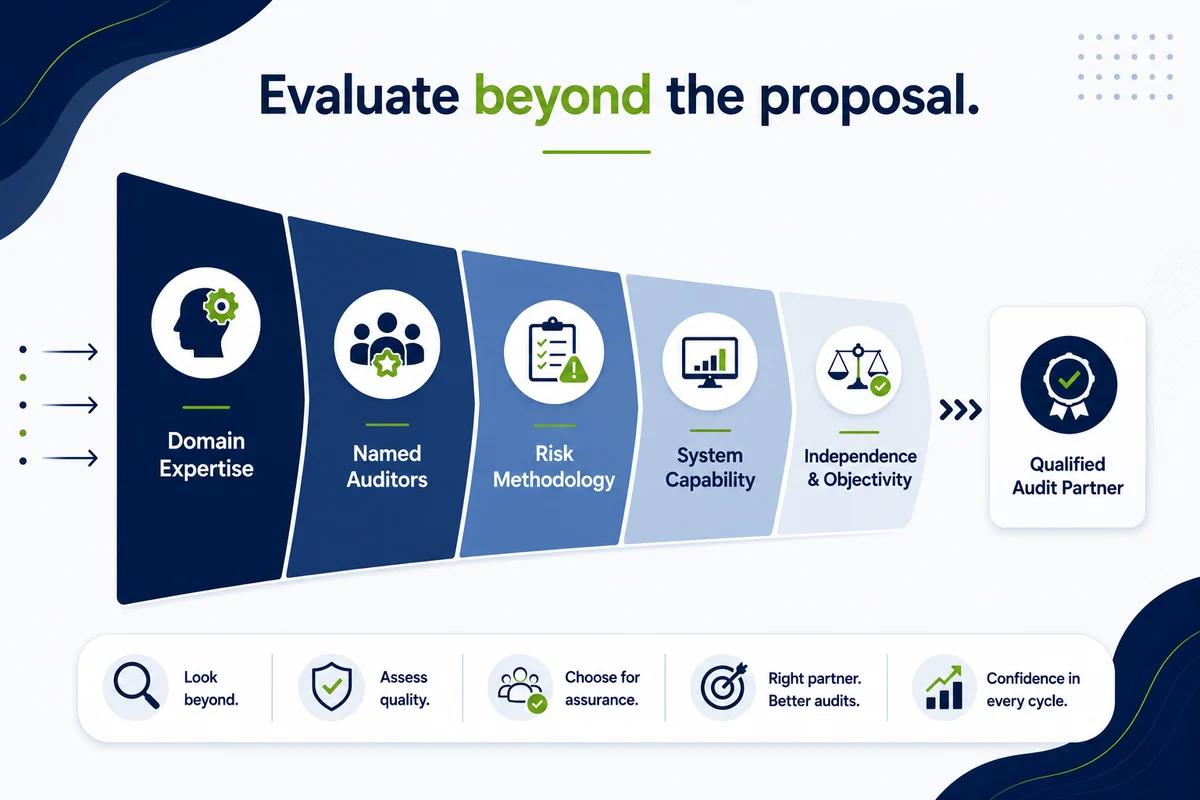
Selecting an external GxP audit provider is therefore a regulatory and quality decision. The organization should evaluate the assigned auditors, methodology, independence, reporting standards, and contractual scope before work begins.
Key Takeaway
Evaluate the auditors who will perform the work, not only the firm presenting the proposal. Confirm their domain experience, independence, risk-based approach, evidence-handling controls, and reporting responsibilities before appointment.
Confirm GxP Auditor Qualifications and Domain Fit
1. Which GxP domains have your proposed auditors covered recently?
Ask for experience that matches your scope, whether it involves PV, GCP, GMP, GLP, GDP, or computerized systems. A firm experienced in manufacturing audits is not automatically qualified to evaluate signal management, clinical-trial controls, or electronic safety systems.
2. Who will actually conduct the audit?
Request the names and CVs of the lead auditor and key team members. Without this review, the organization may select a capable firm but receive auditors who lack experience with the relevant systems, processes, or regulatory framework.
Interview the proposed lead where practical. Confirm experience with your product type, systems, location, and regulatory framework rather than relying on the credentials of the commercial team.
3. How do you assess and maintain auditor competence?
Ask how auditors are qualified, trained, observed, and periodically evaluated.
For pharmacovigilance audits, EMA GVP Module IV requires auditors to demonstrate and maintain proficiency through an appropriate combination of education, work experience, and training. It also expects the team to possess relevant auditing, regulatory, process, and system knowledge.
Evaluate the Risk-Based GxP Audit Methodology
4. How will you create a risk-based audit plan for our scope?
The firm should explain how process criticality, previous findings, organizational changes, delegated activities, and performance information influence the scope and sampling strategy.
GVP Module IV requires strategic, tactical, and individual pharmacovigilance audit planning to be supported by documented risk assessment. It also expects risk-based sampling and testing during individual engagements.
5. How does your methodology change across GxP domains?
One audit lifecycle may work across several domains, but the technical examination must change.
ICH E6(R3), which is currently effective in the EU, promotes proportionate and risk-based approaches to clinical-trial design and conduct. A GCP audit should therefore not be performed using a repurposed GMP or PV checklist.
Ask how the firm adapts interviews, sampling, evidence review, and finding criteria for each applicable domain.
To reduce the risk of a checklist-based audit, request a brief explanation of how the proposed approach will be adapted to the specific scope, systems, products, and regulated activities.
6. How do you assess computerized systems and data integrity?
Ask how the auditors examine access controls, audit trails, data flows, interfaces, change management, validation evidence, and electronic records.
Where computerized systems are in scope, the methodology should reflect the applicable requirements, including EU GMP Annex 11 for computerised systems.
Test Independence, Quality Control, and Resourcing
7. How do you identify and manage conflicts of interest?
Ask how the external GxP audit provider screens previous employment, consulting relationships, financial interests, and current assignments.
GVP Module IV requires pharmacovigilance audit independence and objectivity to be structured and documented. Auditors should remain free from interference when determining scope, conducting the audit, and communicating results.
8. Will subcontractors be used?
The proposal should state whether freelance or partner auditors may support the engagement, how they are qualified, and whether substitutions require written approval.
The competence agreed during provider selection should not change after contract signature without an appropriate review.
9. How do you maintain consistency across auditors?
Ask about technical review, finding calibration, report approval, and auditor-performance evaluation.
The firm should be able to explain how it reduces unexplained variation in finding classification and technical depth between individual auditors.
Clarify Deliverables, Follow-Up, and Commercial Terms
10. What will the report include, and when will it be issued?
Review a redacted sample report before appointment. Findings should connect objective evidence with applicable criteria and communicate relative significance clearly.
Agree timelines for the draft, factual review, urgent escalation, and final report. GVP Module IV expects findings to be documented, reported according to relative risk, and communicated to management in a timely manner.
11. What post-audit and CAPA support is included?
Clarify whether the engagement includes CAPA-plan review, implementation-evidence review, or a follow-up audit.
Where the same firm also provides remediation consulting, independence boundaries should be documented so it does not later assess its own work without appropriate safeguards.
12. What is included, excluded, and separately chargeable?
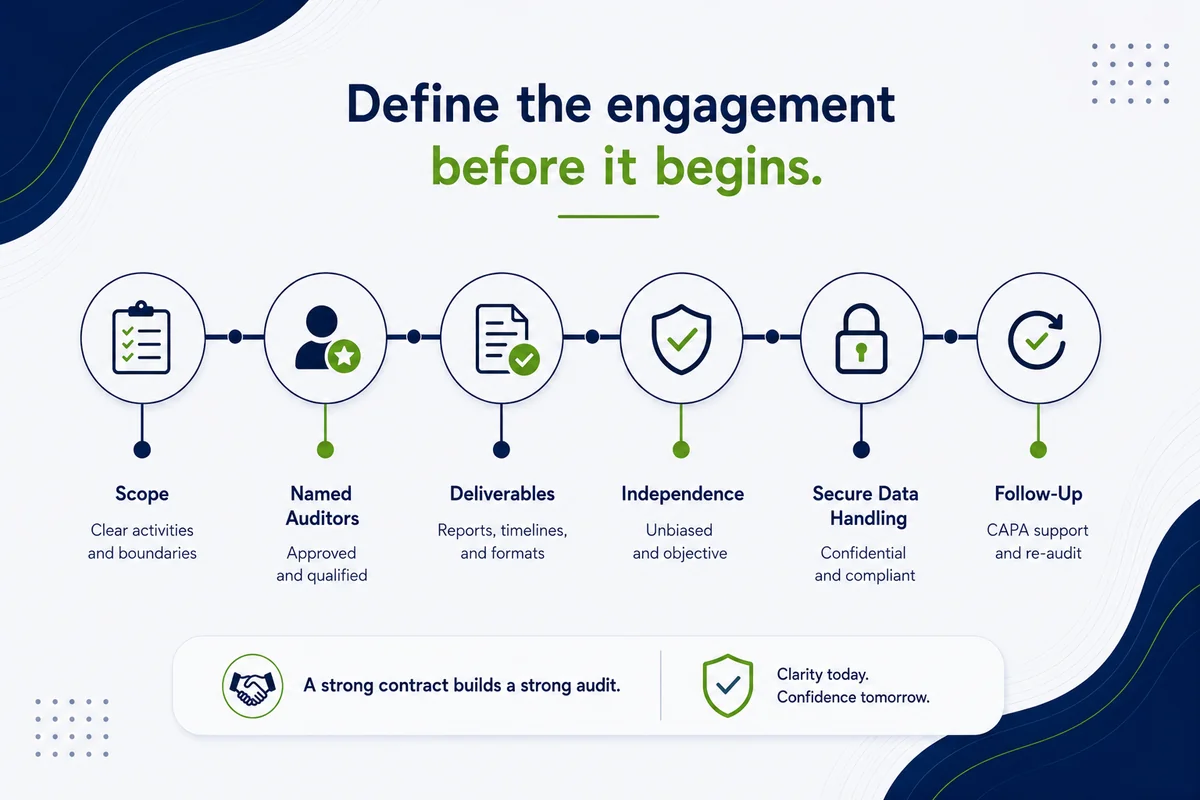
Request an itemized scope covering preparation, document review, interviews, system demonstrations, travel, translation, reporting, follow-up, cancellations, and additional sites.
Transparent pricing makes competing GxP audit services easier to compare and reduces the risk of scope disputes after work begins.
Make the Selection Evidence-Based
A polished proposal does not confirm technical capability. The selection decision should be supported by evidence that the assigned auditors, methodology, independence controls, and deliverables are appropriate for the defined scope and risk.
PVCON Consulting provides GxP audit services, including dedicated PV audits, GCP audits, and other GxP and vendor audit services.
PVCON Consulting supports pharmaceutical, biotechnology, CRO, and medical device organizations through specialized services including GxP Audits, PV Audits, GCP Audits, Other GxP Audits, Pharmacovigilance Consulting, PV Quality Management System support, PvOIC services, Regulatory Intelligence, Medical Writing, Aggregate Report Writing, Clinical Safety Documents, RMP and REMS Writing, PSMF Management, and Training & Upskilling initiatives such as Training Matrix, Regulatory Compliance Training, PV Boot Camp, and Customized Learnings.
Our expertise helps organizations strengthen drug safety operations, improve inspection and audit readiness, and keep PSMF documentation compliant, accurate, and aligned with real-world PV system practices and regulatory expectations.
If you are commissioning an independent GxP audit or qualifying a critical service provider, you can contact our team or learn more about us.