Integrated GxP Audit Programme Case Study
See how PVCON consolidated five separate GxP audit areas into one risk-based programme, reducing duplicate work by 30%, audit effort by 25%, and improving on-time CAPA closure to 94%.
- Client
- Life sciences organisation
- Scope
- PV, GCP, GMP, GDP and computerized system audits
- Focus
- Audit consolidation, risk-based planning and CAPA oversight
Résultats
- GxP areas consolidated
- 5GxP areas consolidated
- less duplicate work
- 30%less duplicate work
- less audit effort
- 25%less audit effort
- on-time CAPA closure
- 94%on-time CAPA closure
One Audit Programme, Five GxP Functions
How PVCON helped a life sciences organisation consolidate fragmented GxP audits into one coordinated, risk-based programme.
Five Functions Were Auditing Separately
The organisation was managing audits across five GxP areas, including Pharmacovigilance and GCP audits alongside GMP, GDP and computerized system audits.
Each function had its own audit activities, planning and follow-up.
While the individual audit streams were functioning, managing them separately was creating unnecessary overlap. Similar activities could be reviewed more than once, audit effort was being duplicated, and oversight across the wider GxP environment was inconsistent.
The organisation needed a clearer way to understand its overall risk position without increasing the audit burden on internal teams.
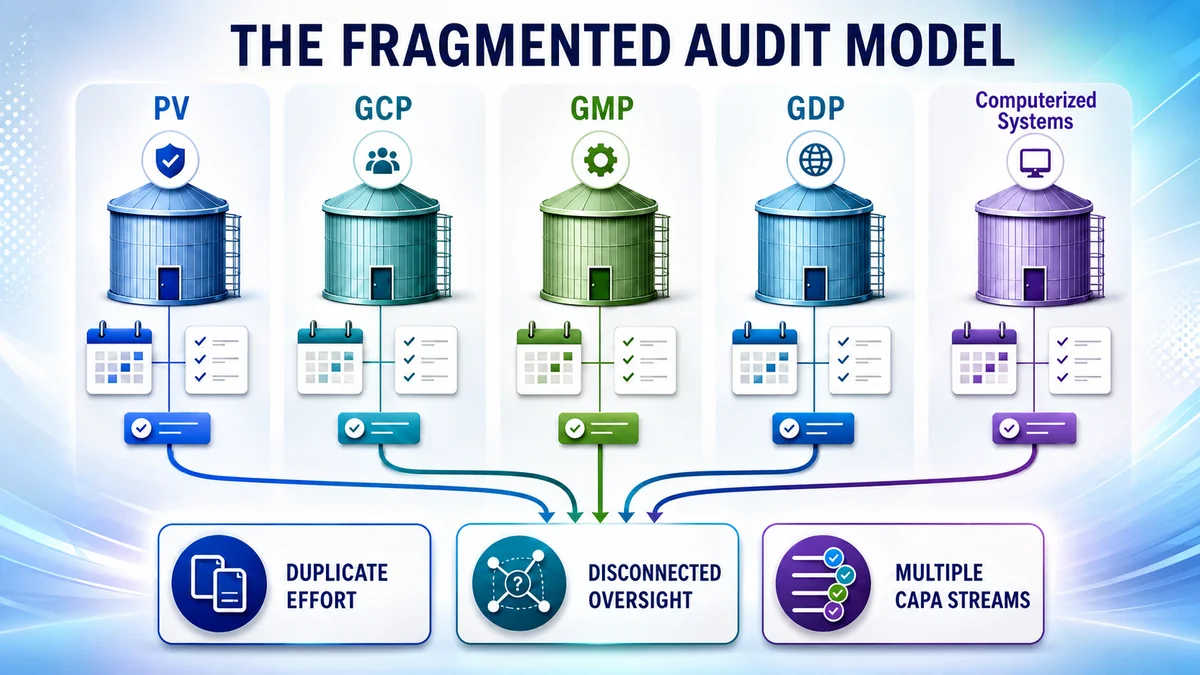
Moving From Separate Audits to One Risk-Based Programme
PVCON brought the five audit areas into a single, coordinated GxP audit programme.
Instead of planning each function independently, audit activities were organised through a unified risk-based GxP audit approach, allowing priorities to be viewed across the wider GxP environment.
Audit planning was consolidated, helping reduce unnecessary duplication between functions.
CAPA follow-up was also brought into a centralised tracking structure, creating greater visibility over open actions and closure status across the programme.
The change did not remove the specialist requirements of each GxP function. It created one governance structure through which those different audit activities could be planned, prioritised and followed consistently.
What Consolidation Changed
| Area | Before | Integrated Approach | Measured Impact |
|---|---|---|---|
| Audit Structure | Five separately managed GxP audit streams | One coordinated audit programme | 5 GxP areas consolidated |
| Audit Planning | Overlapping activities across functions | Unified risk-based planning | Duplicate work reduced by 30% |
| Audit Effort | Repeated planning and execution effort | Coordinated audit coverage | Audit effort reduced by 25% |
| CAPA Oversight | Follow-up managed across separate streams | Centralised CAPA tracking | 94% on-time CAPA closure |
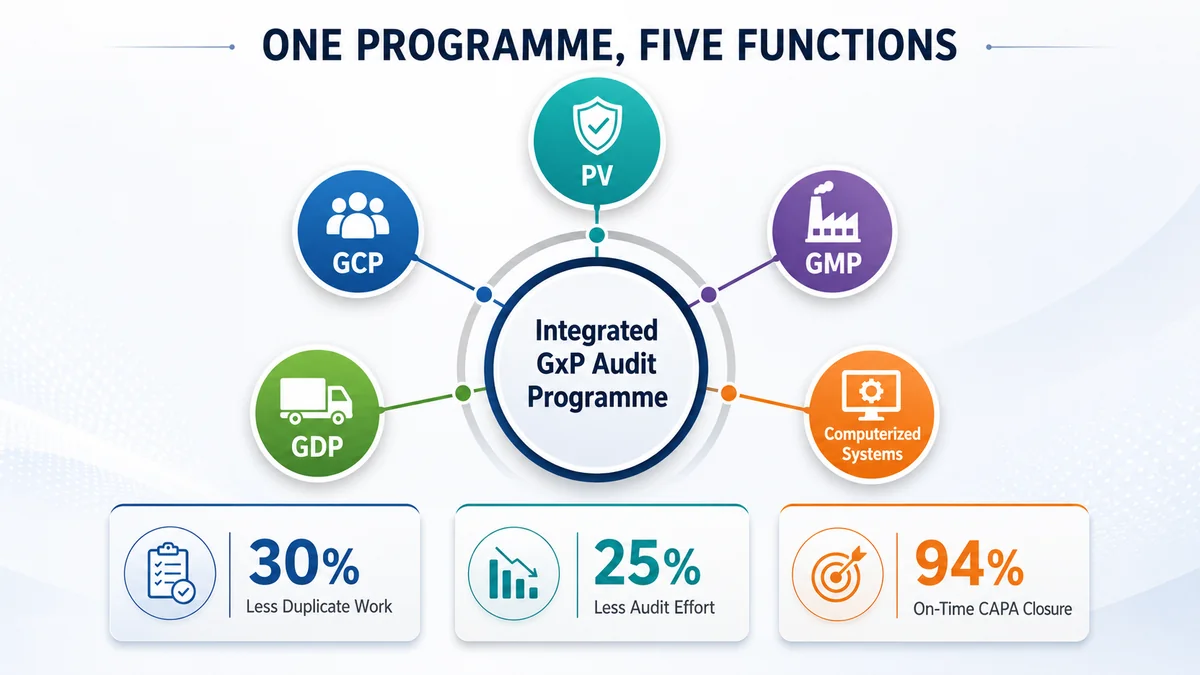
Less Duplication, Stronger Oversight
The consolidated programme produced measurable improvements across both audit efficiency and follow-through.
Duplicate audit work fell by 30%, while overall audit effort was reduced by 25%.
At the same time, centralised CAPA tracking strengthened follow-up across the programme, with 94% of CAPAs closing on time.
The organisation gained a clearer view of audit activity across all five GxP functions without requiring five separate oversight models.
A More Connected View of GxP Risk
The value of integration was not simply doing fewer audits.
It was creating a programme in which audit priorities, effort and CAPA follow-up could be managed through one coordinated view while preserving the requirements of each GxP area.
For the organisation, that meant less duplication, better visibility and a more consistent approach to GxP assurance and audit oversight.
Managing multiple GxP audit streams? Explore PVCON's GxP audit services or contact PVCON to discuss a coordinated, risk-based audit programme.