PV Inspection Readiness Case Study
See how PVCON helped a pharmaceutical company close 92% of identified PV gaps in 10 weeks, reduce overdue CAPAs from 35 to 3, and strengthen inspection readiness.
- Client
- Pharmaceutical company (Marketing Authorisation Holder)
- Focus
- PV inspection readiness, CAPA remediation, vendor oversight
- Duration
- 10 weeks
Resultados
- of 22 gaps closed
- 92%of 22 gaps closed
- overdue CAPAs
- 35 → 3overdue CAPAs
- critical findings
- Zerocritical findings
- engagement duration
- 10 weeksengagement duration
From Inspection Risk to Readiness
How PVCON helped a pharmaceutical company reduce a growing CAPA backlog, strengthen evidence control, and prepare for regulatory inspection within 10 weeks.
When Inspection Readiness Became a Business Risk
A pharmaceutical company was approaching a regulatory inspection with growing concerns about whether its pharmacovigilance system could demonstrate control under scrutiny.
The system was functioning, but several weaknesses had accumulated beneath the surface.
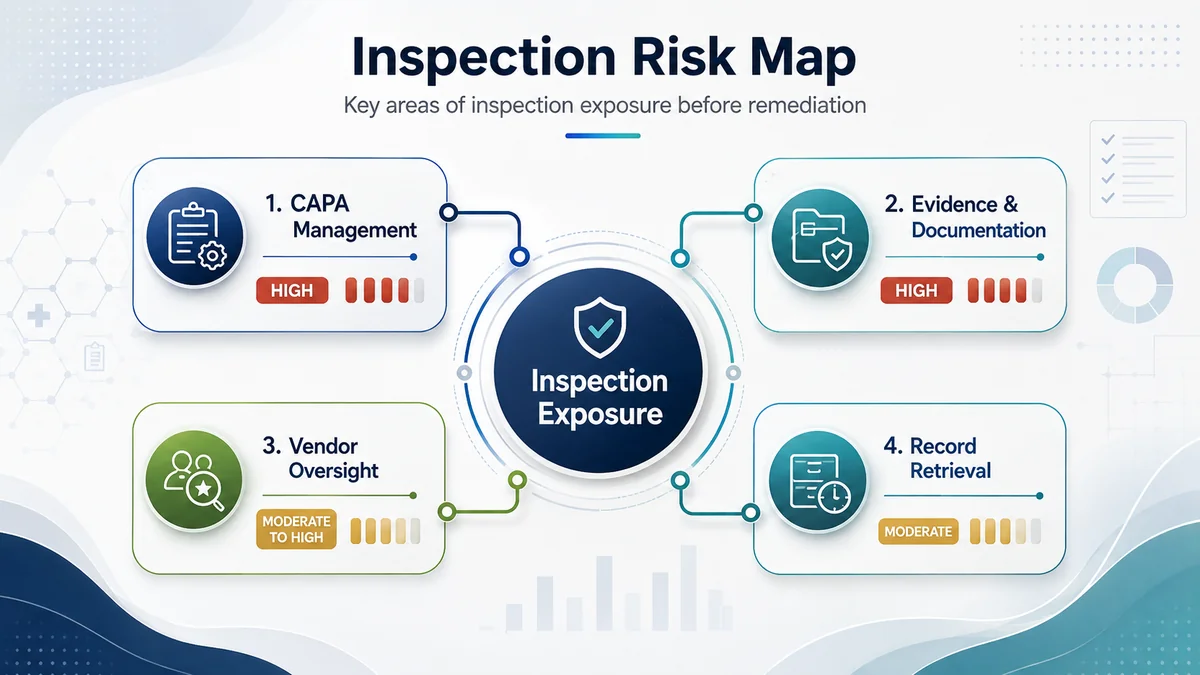
There were 35 overdue CAPAs. Supporting evidence was fragmented across different records and teams. Vendor oversight documentation needed strengthening, and retrieving inspection-critical information was taking longer than expected.
The challenge was not simply whether the required processes existed. The organisation also needed to demonstrate, clearly and quickly, how issues were identified, who was responsible, what action had been taken, and where the supporting evidence could be found.
Together, these weaknesses increased the organisation's exposure during inspection.
Turning 22 Gaps Into a Focused Remediation Plan
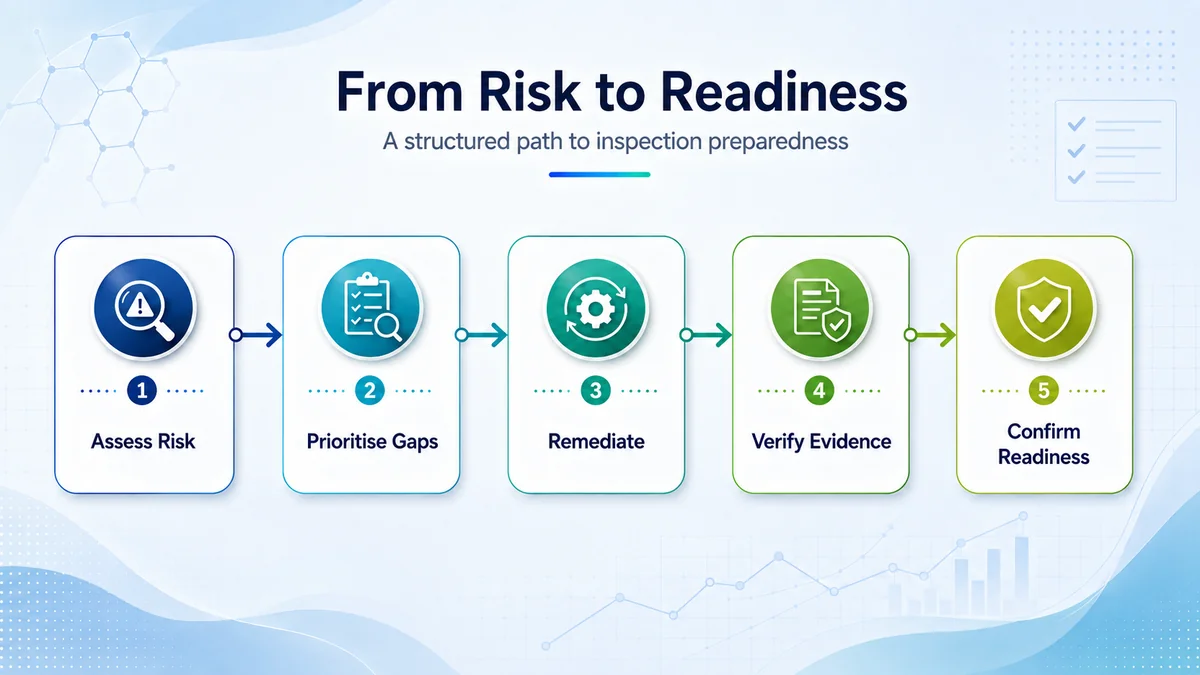
PVCON began with a risk-based pharmacovigilance audit to establish where the greatest inspection-readiness gaps existed.
The assessment identified 22 gaps requiring action. Rather than treating them as one undifferentiated list, PVCON prioritised the areas with the greatest potential inspection impact.
A focused remediation plan was then developed around CAPA closure, evidence organisation, vendor oversight, and inspection documentation.
A mock inspection provided the next layer of assurance, helping the organisation assess its broader pharmacovigilance inspection readiness. It tested how the system performed under inspection-like conditions, including record retrieval, documentation readiness, team responses, and the ability to demonstrate oversight.
Progress was tracked throughout the 10-week engagement, allowing the organisation to address the most important issues first and review supporting evidence as remediation progressed.
From Identified Risk to Evidence of Control
| Risk Area | What PVCON Found | PVCON Intervention | Evidence of Improvement |
|---|---|---|---|
| CAPA Management | 35 overdue CAPAs | Risk-based prioritisation and closure plan | Overdue CAPAs reduced to 3 |
| Evidence Readiness | Supporting evidence was fragmented | Evidence mapping and readiness review | Critical records better organised for retrieval |
| Vendor Oversight | Oversight documentation required strengthening | Oversight review and remediation | Clearer documentation and accountability |
| Inspection Response | Readiness had not been tested under inspection conditions | Mock inspection and team preparation | Response capability tested before inspection |
What Changed in 10 Weeks
The improvement was measurable.
Of the 22 gaps identified, 92% were closed within 10 weeks. The number of overdue CAPAs fell from 35 to 3, and the inspection concluded with zero critical findings.
But the value of the engagement went beyond reducing the number of open actions.
The organisation entered the inspection with better visibility across its PV system, clearer status of outstanding issues, stronger supporting evidence, and a more structured way to demonstrate how critical PV activities were being controlled.
Beyond the Immediate Inspection
What began as an inspection-readiness exercise helped the organisation move away from reactive preparation toward a more controlled approach to pharmacovigilance compliance and audit readiness.
The case demonstrates an important distinction: inspection readiness is not only about having the right documentation. It is about being able to demonstrate control when that documentation, process, or decision is challenged.
PVCON supports pharmaceutical companies, MAHs, Sponsors, and CROs with risk-based PV audits, mock inspections, gap assessments, CAPA remediation and PV QMS support, and inspection-readiness support.
Preparing for an inspection? Talk to PVCON about strengthening your PV readiness.