Pharmacovigilance Inspection Readiness Training
Learn how PV teams can prepare personnel, systems, vendors, and documentation for a pharmacovigilance regulatory inspection.
Pharmacovigilance Inspection Readiness Training: How PV Teams Should Prepare
An inspection notice arrives, and the first response is often to organize procedures, records, and the PSMF. However, readiness is not demonstrated by documents alone.
The real challenge begins when personnel are asked to explain how a safety activity moved through the system, why a decision was made, and where the supporting evidence is stored.
Pharmacovigilance inspection readiness training should therefore prepare teams to demonstrate how the PV system operates in practice, not simply how its procedures are written.
Key Takeaway
Effective inspection readiness training connects responsibilities, current procedures, traceable records, system demonstrations, and clear communication.
The objective is to confirm that personnel can explain their role, retrieve supporting evidence, and demonstrate how activities move across processes, systems, and vendors.
What Inspectors May Examine Across the PV System
EMA GVP Module III explains that system inspections review the procedures, systems, personnel, and facilities used to meet pharmacovigilance obligations. Product-specific cases may provide practical evidence of how the system functions.
Subject matter experts should be ready to explain where an activity begins, who owns each step, which system captures it, how quality is checked, and how exceptions are escalated.
An unclear response in one area may lead to wider questions about case handling, reconciliation, vendor oversight, deviations, and CAPA effectiveness. Readiness should therefore focus on how connected processes operate together.
Preparation may cover ICSR handling, regulatory submissions, ongoing safety evaluation, risk-management activities, record keeping, outsourced processes, and PSMF content.
Align the PV Training Matrix With Current Responsibilities
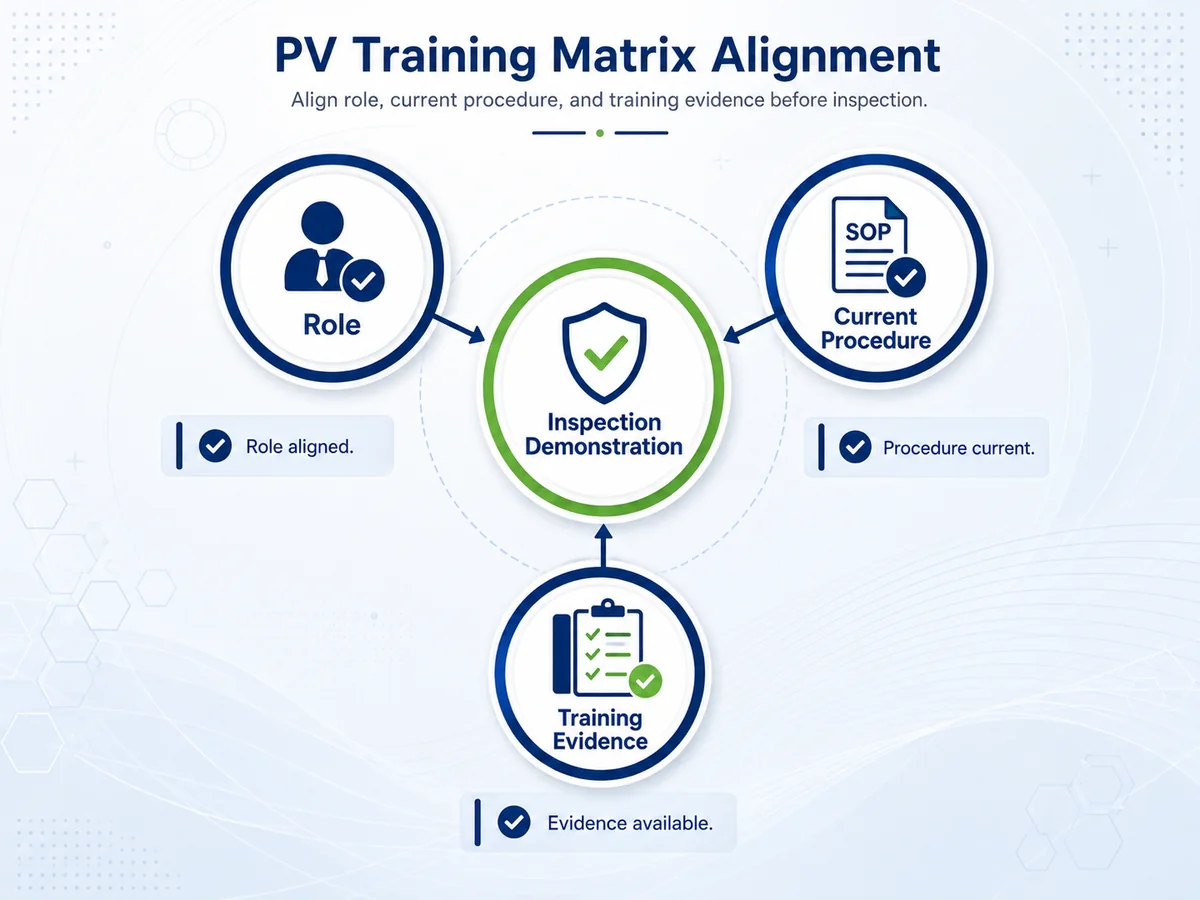
Before conducting mock interviews, confirm that the PV training matrix reflects current roles, delegated activities, and controlled procedures.
For example, an employee who moves from case processing to quality review may have a complete training record but lack training for their new approval and escalation responsibilities.
To reduce this risk, the training matrix should be reviewed whenever roles, procedures, systems, or delegated activities change.
A mismatch between an SOP version and a training record does not automatically establish noncompliance. The organization should first determine whether the revision materially changed the task and whether retraining was required.
Records should show which version was assigned, how training impact was assessed, and whether affected personnel completed the required learning before applying a material change.
Readiness training should also include non-PV functions that can receive or influence safety information, including medical information, product complaints, regulatory affairs, clinical operations, and commercial teams.
Rehearse Traceability Through Representative Records
A team may explain a process clearly but still struggle to retrieve the records supporting a specific decision.
A pharmacovigilance mock inspection should therefore assess whether personnel can locate and explain evidence without relying on a prepared presentation or one individual's knowledge of the system.
For ICSR activities, select representative cases and trace them from receipt through assessment, follow-up, quality review, and regulatory submission. Confirm that source information, timestamps, medical coding, decisions, and submission evidence are available and consistent.
The same approach can be applied to signal decisions, reconciliations, safety agreements, training evidence, and PSMF source documents.
The purpose is not to impose an arbitrary retrieval-time target. It is to identify disconnected repositories, unclear ownership, incomplete records, and reliance on informal knowledge before an inspector makes the same request.
Evaluate CAPA Evidence, Not Closure Status
A CAPA may be marked as closed, but that status alone does not show that the underlying issue has been resolved.
Personnel should be able to explain the root cause, actions taken, completion evidence, and effectiveness review. If the issue recurs, the organization should reassess whether the original root cause and corrective action were appropriate.
Retraining should not be the default response when the actual cause is an unclear procedure, unsuitable system, insufficient resources, or undefined responsibility.
Include Vendor Oversight in GVP Inspection Readiness
Outsourced pharmacovigilance activities remain part of the MAH's PV system. If internal teams and service providers understand responsibilities differently, they may give conflicting answers about case exchange, escalation, deviation handling, or evidence ownership.
Mock inspection exercises should therefore confirm that agreements, responsibilities, escalation pathways, and PSMF descriptions remain aligned.
Current MHRA GPvP inspection guidance confirms that service-provider activities may be reviewed during an MAH inspection. Contracts should also support access to relevant data, documentation, and appropriate assistance during an inspection.
Readiness exercises should evaluate vendor qualification, assigned responsibilities, case exchange, reconciliation, performance monitoring, deviations, CAPAs, and escalation pathways. The operating arrangement should also remain consistent with the PSMF and applicable agreements.
Prepare Personnel for Inspection Communication
Even experienced personnel may provide unclear or excessive responses under inspection pressure.
Training should help subject matter experts answer the question asked, remain within their responsibilities, and support their responses with evidence. They should confirm the correct information rather than guess when they are unsure.
The inspection lead, document coordinator, responsible PV leadership, Local PVoI where applicable, system demonstrators, and backup personnel should understand their roles. Document review, escalation, response tracking, and handoffs between teams should be rehearsed.
Maintain Pharmacovigilance Inspection Readiness Continuously
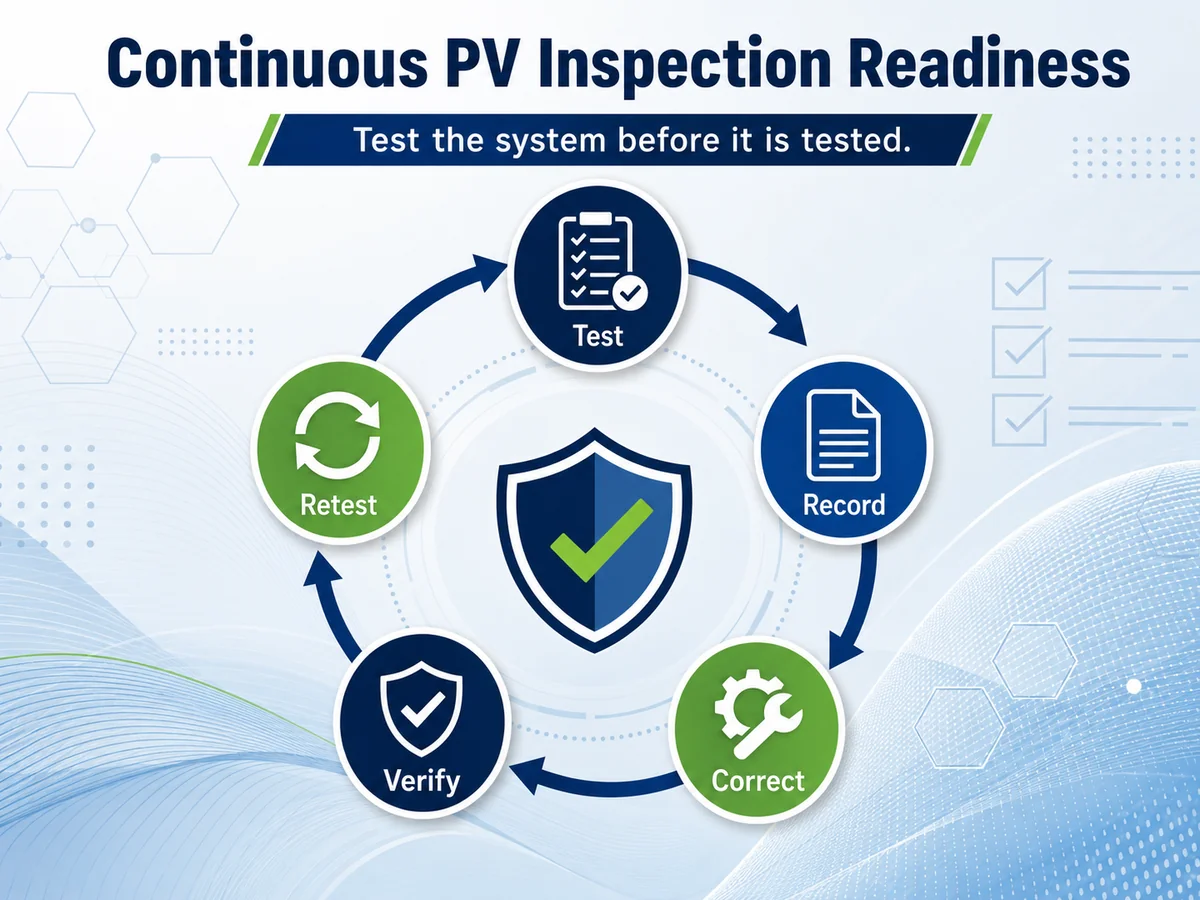
Inspection readiness should not begin only after an inspection notice is received.
Periodic evidence reviews, role-based training, process walkthroughs, and mock interviews can identify gaps before they become inspection concerns.
Organizations can also review common pharmacovigilance inspection readiness gaps to determine whether preparation activities address system-level weaknesses rather than document availability alone.
Strengthen Readiness Before the Inspection Window
PVCON Consulting supports organizations through Pharmacovigilance Training and Upskilling, GxP Audit Services, and PV Consulting Services. These engagements assess role readiness, system evidence, vendor oversight, inspection communication, and alignment between documented controls and operating practice.
PVCON Consulting supports pharmaceutical, biotechnology, CRO, and medical device organizations through specialized services including GxP Audits, PV Audits, GCP Audits, Other GxP Audits, Pharmacovigilance Consulting, PV Quality Management System support, PvOIC services, Regulatory Intelligence, Medical Writing, Aggregate Report Writing, Clinical Safety Documents, RMP and REMS Writing, PSMF Management, and Training & Upskilling initiatives such as Training Matrix, Regulatory Compliance Training, PV Boot Camp, and Customized Learnings.
Our expertise helps organizations strengthen drug safety operations, improve inspection and audit readiness, and keep PSMF documentation compliant, accurate, and aligned with real-world PV system practices and regulatory expectations.
If you are planning an independent inspection-readiness assessment or a role-based mock inspection program, you can contact our team or learn more about us.